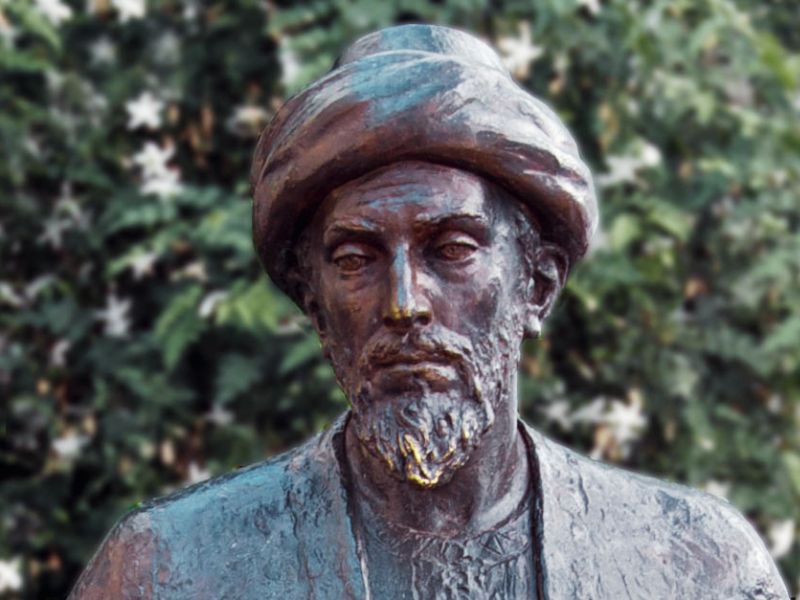

If Ibn Tumart was the spiritual lightning that struck the High Atlas, Abd al-Mu’min was the thunder that followed. He was the architect of an empire, the general who turned a mountain sect into a global superpower, and the first to bear the title of Caliph in the Maghreb.
Born near Tlemcen around 1094, Abd al-Mu’min did more than just lead; he unified North Africa and Al-Andalus under a single banner, creating a geopolitical footprint that remains the largest unified state in Moroccan history.
When Ibn Tumart, the “Mahdi,” passed away in 1130 in the mountain sanctuary of Tinmel, the movement faced an existential crisis. Abd al-Mu’min, his most loyal disciple and a brilliant military strategist, stepped into the void.
🏺 Building the Empire from the High Atlas
For the first 17 years of his leadership, Abd al-Mu’min remained in the mountains, systematically dismantling the Almoravid hold on Morocco.
- The Fall of Marrakesh (1147): After a long and grueling campaign, he finally captured the Almoravid capital. In a symbolic act of “purification,” he ordered the destruction of many Almoravid buildings, replacing them with the geometric, austere monuments that would define Almohad style.
- Unifying the Maghreb: Unlike the dynasties before him, Abd al-Mu’min looked eastward. He conquered the central Maghreb (modern-day Algeria) and Tunisia, reaching as far as Libya. For the first time, all of North Africa was ruled by a single, indigenous Berber authority.
- Al-Andalus: He crossed the Strait of Gibraltar to restore order in Muslim Spain, bringing cities like Seville and Cordoba into the Almohad fold and halting the advance of the Christian kingdoms.
🏛️ A Legacy of Stone and Science
Abd al-Mu’min was a ruler of immense administrative talent. He established a professional civil service, conducted the first comprehensive land surveys of North Africa, and turned his court into a sanctuary for scholars like Ibn Tufayl and Averroes.
- The Koutoubia & Tinmel: He commissioned the Great Mosque of Tinmel to honor his master and began the construction of the iconic Koutoubia Mosque in Marrakesh. His vision for architecture was one of “Majestic Simplicity”—massive structures that relied on proportion and geometry rather than delicate ornament.
- The Navy: He built a massive Mediterranean fleet, making the Almohad Caliphate the dominant naval power of the 12th century.
📜 The First Caliph
By taking the title Amir al-Mu’minin (Commander of the Faithful), Abd al-Mu’min formally broke all ties with the Abbasid Caliphate in Baghdad. He declared that the leadership of the Islamic world now resided in the West, centered in the red city of Marrakesh.
Leave a Reply