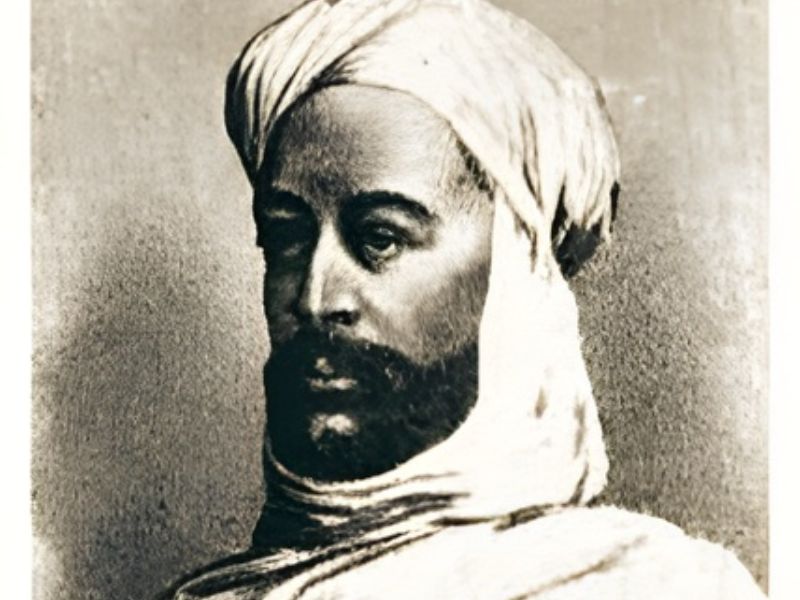

In the history of the Maghreb, few names carry the weight of Ibn Tumart. He was the “Mahdi” of the Atlas, a revolutionary scholar who descended from the mountains to dismantle an empire and forge the Almohad Caliphate—a dynasty that would eventually rule from the edges of the Sahara to the heart of Al-Andalus.
If the Almoravids built the foundations of Morocco, Ibn Tumart provided the fierce, uncompromising intellectual and spiritual fire that redefined it.
Born in the rugged Anti-Atlas mountains among the Masmuda Berber tribes, Muhammad ibn Tumart was a man of immense intellect and an even greater will. His journey from a humble mountain village to the leader of a global empire is the stuff of legend.
🏺 The Intellectual Wanderer
Ibn Tumart’s revolution began with a journey for knowledge. He traveled to the great centers of learning in the East—Baghdad, Cairo, and Mecca—where he studied under the greatest masters of Islamic theology.
- The Message of Unity: He returned to Morocco obsessed with the concept of Tawhid (the absolute oneness of God). He felt the ruling Almoravids had become too literal and decadent.
- The Moral Crusader: Legend has it that as he walked back through North Africa, he famously smashed musical instruments and overturned jars of wine, preaching a return to a purer, more disciplined life.
🏔️ The Sanctuary of Tinmel
After being expelled from Marrakesh for challenging the Sultan, Ibn Tumart retreated to the high, impenetrable village of Tinmel in the High Atlas.
- Proclaiming the Mahdi: In 1121, he declared himself the Mahdi—the “guided one.”
- The Masmuda Alliance: He used his incredible oratory skills to unite the mountain tribes. He didn’t just teach theology; he organized them into a sophisticated military and social hierarchy that would become the Almohad state.
- A Berber Quran: To ensure his followers understood his message, he translated his teachings into the Tachelhit language, making complex theology accessible to the Berber people.
🏛️ The Legacy: The Almohad Empire
Ibn Tumart died in 1130, never living to see the fall of Marrakesh. However, he left behind a successor, Abd al-Mu’min, who fulfilled his vision.
- The Architecture of Power: The Almohads went on to build the Koutoubia in Marrakesh, the Giralda in Seville, and the Hassan Tower in Rabat. All of these monuments trace their lineage back to the austere, geometric beauty favored by Ibn Tumart.
- The Tinmel Mosque: Today, the Mosque of Tinmel stands as his greatest monument. Though in ruins after the 2023 earthquake, its hauntingly beautiful arches remain a symbol of the intellectual spirit he ignited in the mountains.
Leave a Reply