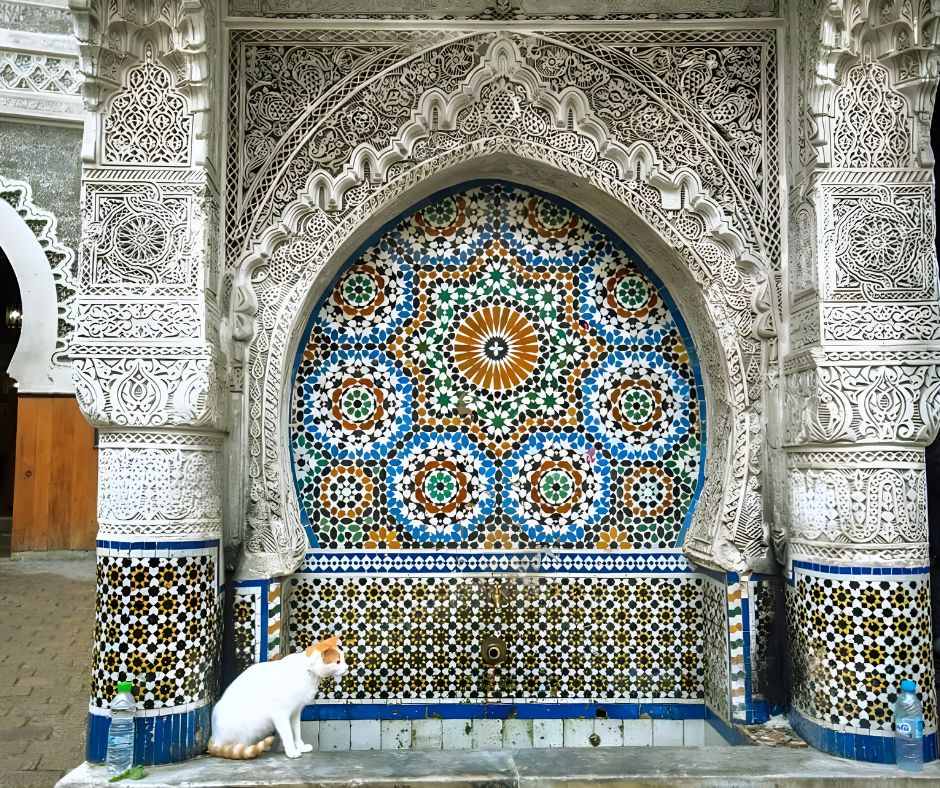

In the bustling arteries of the medina, where the air is thick with spice and the sun beats down on ochre walls, the sight and sound of a communal Moroccan fountain (or Saqqaya) offer an immediate moment of cool tranquility. These intricate structures are far more than public water sources; they are monuments of charitable tradition, masterpieces of architectural design, and enduring symbols of life in the arid climate.
1. 📜 A History of Water and Piety
The function and design of Moroccan fountains are deeply rooted in Islamic tradition and the practical necessities of urban life.
- The Tradition of Sabil: Historically, the construction of a public fountain was considered an act of great religious piety and charity (Sadaqa Jariya—ongoing charity). Fountains ensured that travelers, residents, and animals had free, accessible water, especially crucial in crowded cities like Fez and Marrakesh.
- Moorish/Andalusian Influence: Like the Moroccan Riad, the design of the Saqqaya flourished under the influence of Al-Andalus, where water management and architecture were highly sophisticated. The elaborate fountains reflect the aesthetic principles shared across palaces, mosques, and public spaces.
- Vital Urban Function: Before indoor plumbing was widespread, these fountains served as essential daily gathering points for fetching drinking water, cleaning, and providing relief from the heat.
2. 🎨 The Architecture of Water and Light
Moroccan fountains are renowned for their breathtaking decorative complexity, transforming a functional structure into public art.
- Intricate Design: The Saqqaya is typically set within a recessed niche built into a sturdy wall, often adjacent to a mosque, madrasa (religious school), or palace.
- The Materials: They are a showcase of Morocco’s decorative arts:
- Zellige: The lower half is almost always covered in dazzling, geometric Zellige mosaic tiles. The precision and mathematical complexity of these patterns create mesmerizing, non-representational beauty.
- Carved Wood: Above the niche, a protective wooden canopy of carved cedarwood often shields the water source and displays rich craftsmanship.
- Stucco & Calligraphy: The upper panels feature delicate, carved stucco plasterwork and Kufic calligraphy bearing religious verses, blessings, or inscriptions detailing the benefactor who funded the fountain.
- The Cooling Effect: The water, often channeled through spouts (sometimes brass or bronze), pools into a trough before draining. The combination of shade, stone, and running water creates a microclimate, offering natural cooling to the surrounding street.
3. 💧 Fountains of Note: Marrakesh and Beyond
While every medina possesses historic fountains, some stand out as particular masterpieces of the craft:
- Fountain of Mouassine (Marrakesh): Located in the Mouassine district, this is one of the most celebrated Saqqayas. Built during the Saadian period (16th century), it exemplifies the period’s grandeur with its stunning proportions and rich decorative detail, originally part of a larger complex of public baths and a mosque.
- Fountain of Nejjarine (Fez): Set in the heart of Fez’s woodworkers’ souk, the Nejjarine fountain is famous for its towering cedarwood canopy and intricate zellige work, serving as a picturesque landmark in the ancient city.
Today, while the function of the fountains has evolved, their beauty and cultural significance endure. They stand as quiet, elegant landmarks, reminders of a time when the flow of water was the flow of life.
🛍️ Follow the Sound of Water
Moroccan fountains are beautiful testaments to history, charity, and craftsmanship, waiting to be discovered behind every turn of the medina.
Ready to find the most beautiful, hidden Saqqayas on your next trip?
Click here to download our free guide detailing the locations and history of the Top 10 Historic Fountains in Marrakesh and Fez!

Leave a comment