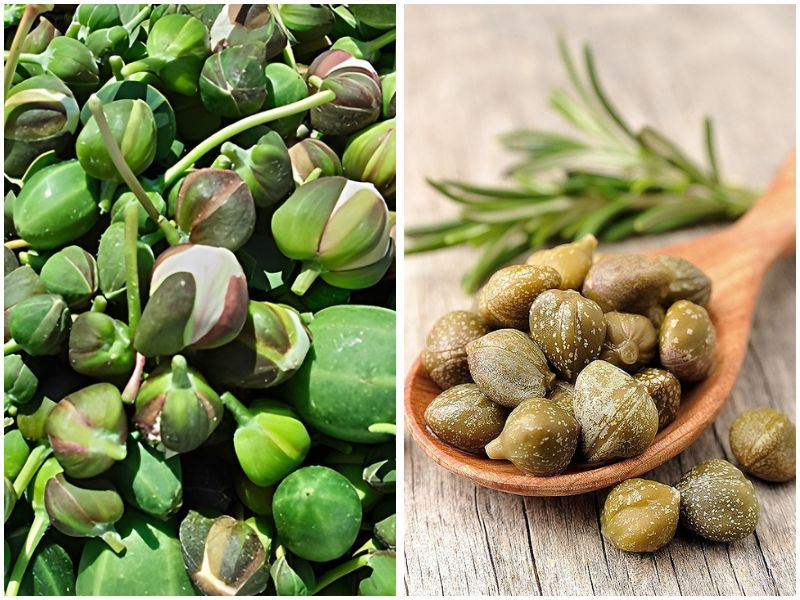

While saffron and argan oil often take the spotlight in Moroccan exports, there is a tiny, piquant treasure harvested in the shadows of the Middle Atlas that dominates the global market. Morocco is the world’s leading producer and exporter of capers (Capparis spinosa), providing nearly 70% of the world’s supply.
From the rocky soil of Safi to the sun-drenched hills of Fez and Taounate, the Moroccan caper is a masterclass in Mediterranean flavor—a burst of brine, salt, and floral tang that elevates a dish from ordinary to gourmet.
Capers are not fruits or vegetables; they are the unripened flower buds of a prickly, perennial shrub that thrives in the harshest conditions. In Morocco, the harvest is a traditional art form, requiring patience, precision, and thousands of skilled hands.
🏺 The Art of the Harvest
The Moroccan caper industry is built on the labor of small-holder farmers and rural cooperatives.
- Hand-Picked Precision: Capers must be harvested by hand before the flower blooms. The smaller the bud, the more prized and expensive it is. The tiniest are labeled “Nonpareilles” (unparalleled), followed by the slightly larger “Surfines.”
- The Salting Ritual: Once picked, capers are intensely bitter. They undergo a rigorous curing process—typically fermented in a heavy brine of sea salt and water, or packed in dry salt. This process develops their signature mustard-oil tang and floral aroma.
- Caper Berries: If the bud is left to bloom and fruit, it becomes a Caper Berry (Cornichon de Câpres). These are larger, crunchy, and often served with the stem attached, perfect for Moroccan salads and charcuterie.
🥘 The Caper in the Moroccan Kitchen
While many capers are exported to Italian and French kitchens, they play a vital, “secret” role in authentic Moroccan gastronomy.
- The Tang of the Tagine: In the north of Morocco, capers are frequently added to fish tagines and chicken dishes with preserved lemons. Their acidity cuts through the richness of the olive oil and spices.
- M’rouzia and Beyond: While less common in the sweet-and-savory M’rouzia, modern Moroccan chefs are using capers to add a salty punch to traditional Zaalouk (eggplant dip) and tomato-based Shakshuka.
- Safi Style: In the coastal city of Safi, capers are often paired with grilled sardines, creating a perfect marriage of sea-salt and mountain-brine.
🩺 More Than Flavor: The Health Secrets
Known as El-Kebbar in Arabic, capers have been used in Moroccan traditional medicine for centuries.
- Digestive Power: They are rich in fiber and believed to stimulate the appetite and aid digestion.
- Antioxidant Bomb: Capers contain high levels of quercetin and kaempferol, potent antioxidants that support heart health and reduce inflammation.

Leave a comment