

Bahia Palace
Located in the heart of Marrakesh’s old Medina, Bahia Palace is a stunning example of Moroccan architecture and craftsmanship. This breathtaking palace is a must-visit attraction for anyone traveling to Marrakesh.
History of Bahia Palace
The Bahia Palace was constructed in the 1860s. Si Moussa, the grand vizier of the Sultan, built it as a personal residence. His son, Ba Ahmed, expanded and embellished it in the late 1890s. Ba Ahmed was also a grand vizier. The palace took sixteen years to finish and was designed to be a masterpiece of Moroccan craftsmanship. The name “Bahia” means “brilliant” or “dazzling” in Arabic, which is fitting given the palace’s stunning beauty.
Key Events in Bahia Palace’s History:
- 1860s: Si Musa starts building the palace, with the Grand Riad and its adjoining rooms being completed around 1866-1867.
- 1894: Si Musa’s son, Ba Ahmed, takes over. He expands the palace significantly. New areas like the marble-paved Grand Courtyard and private apartments are added.
- 1896-1897: Ba Ahmed constructs the Grand Courtyard. It is one of the largest spaces in the palace. He also builds a grand hall on the east side.
- 1900: Ba Ahmed dies, and the palace becomes royal property. It’s reportedly looted by Sultan Abdelaziz shortly after Ba Ahmed’s death.
- Early 20th century: The palace serves as the residence of the French Resident General during the French Protectorate.
- Post-independence: The palace becomes a royal residence for King Mohammed V. Later, it is transferred to the Moroccan Ministry of Culture. They turn it into a historic monument and tourist attraction.
Architecture and Design
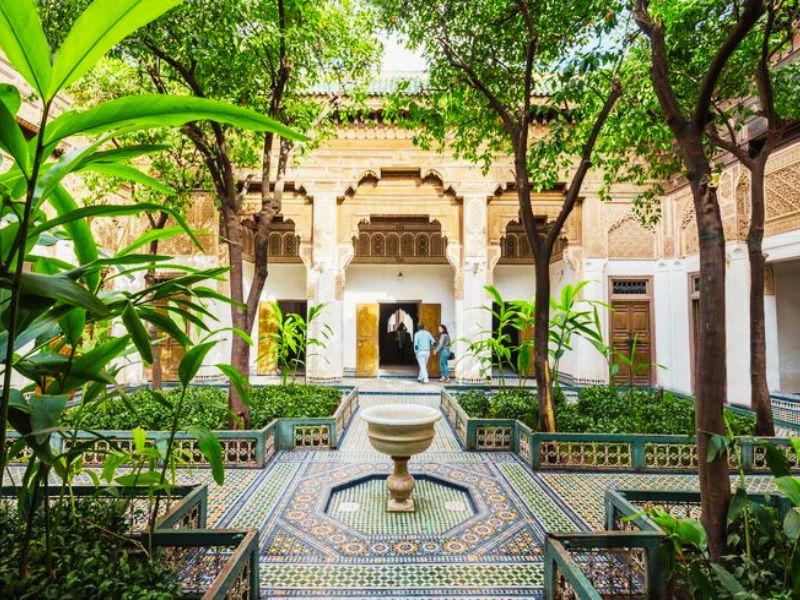
Bahia Palace is a masterpiece of Moroccan architecture, with a mix of Islamic, Arab, and Andalusian influences. The palace is designed around a series of courtyards, gardens, and fountains. These elements offer a tranquil oasis from the bustling streets of Marrakesh. The palace’s intricate tile work, carved wood, and ornate plasterwork are all testaments to the skill of Moroccan craftsmen.
Things to See and Do
Bahia Palace is a large and complex building, with many different rooms, courtyards, and gardens to explore. Here are some of the top things to see and do:
- The Courtyard of Honor: This stunning courtyard is the heart of the palace. It features intricate tile work, carved wood, and ornate plasterwork.
- The Grand Riad: This beautiful garden is a tranquil oasis in the heart of the palace. It features a large fountain and intricate tile work.
- The Harem: This fascinating room provides a glimpse into the private lives of the palace’s former occupants. It features intricate tile work and ornate plasterwork.
- The Museum: The palace also houses a small museum. It features a collection of Moroccan artifacts. These include textiles, jewelry, and ceramics.
Practical Information
- Opening Hours: Bahia Palace is open from 9 am to 5 pm, every day except Fridays. For more details, you can check the Bahia Palace official website.
- Admission: Admission for adults to the palace costs 100 MAD (approximately $10) per person.
- Guided Tours: Guided tours of the palace are available, and can be arranged through the palace’s ticket office.
Bahia Palace is a must-visit attraction for anyone traveling to Marrakesh. This stunning palace is a masterpiece of Moroccan architecture. It showcases exceptional craftsmanship. It provides a fascinating glimpse into the country’s rich history. It also highlights Moroccan culture. Whether you’re interested in history, you appreciate architecture, or you want to experience Moroccan craftsmanship beauty, visit Bahia Palace. It is a must-see destination.
References:
- Bahia Palace website
- “Bahia Palace”, Visit Morocco

Leave a comment