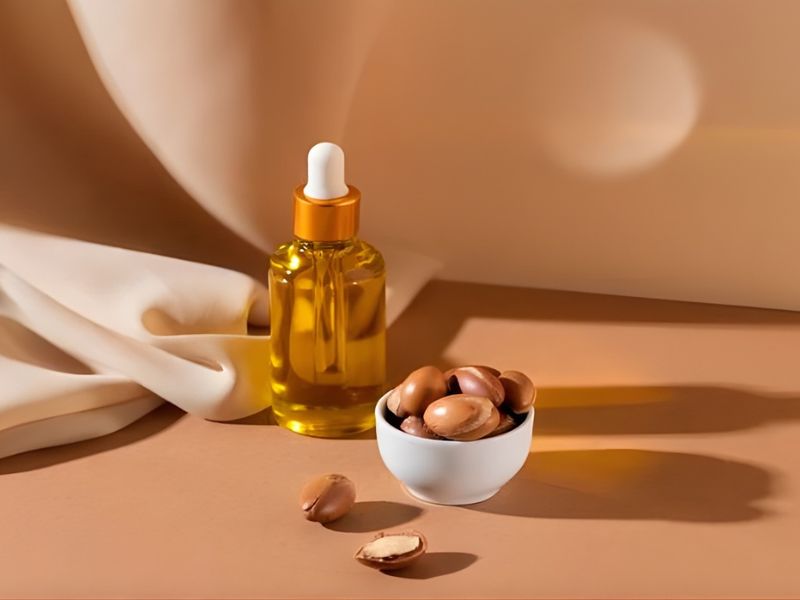

In the arid hills of the Souss Valley, stretching between Essaouira and Agadir, grows a tree that has survived since the Tertiary period: the Argania spinosa. Often called the “Tree of Life,” it produces a nut so valuable and labor-intensive that its oil has earned the title of “Liquid Gold.”
But not all Argan oil is created equal. Depending on how the kernel is treated, it becomes either a world-class culinary delicacy or the most coveted elixir in the global beauty industry.
The production of Argan oil is a UNESCO-recognized heritage, almost exclusively managed by women’s cooperatives. Understanding the difference between Culinary and Cosmetic oil is the key to appreciating this Moroccan miracle.
🏺 The Culinary Gold (The Nutty Masterpiece)
To create culinary Argan oil, the kernels are lightly roasted before being pressed. This single step changes everything:
- Flavor Profile: It has an intense, toasted nutty flavor, reminiscent of hazelnuts and sesame.
- The Health Factor: Rich in Vitamin E and heart-healthy Omega-9, it is scientifically proven to help lower “bad” cholesterol.
- How to Eat It: It is never used for frying. Instead, it is a finishing oil. It is the heart of Amlou (the “Moroccan Nutella”) and is drizzled over couscous, tagines, or simply enjoyed with warm bread and honey at breakfast.
💄 The Cosmetic Gold (The Beauty Secret)
For cosmetic use, the kernels are cold-pressed while raw. By skipping the roasting process, the oil retains its full “raw” nutrient profile:
- The Scent: Authentic cosmetic Argan oil has a very faint, slightly musky “nutty” scent that disappears quickly upon contact with the skin. If it smells like popcorn, it’s culinary; if it smells like nothing, it’s likely over-processed or fake.
- Skin & Hair Benefits: It is a non-greasy “dry oil.” It’s packed with squalene and antioxidants, making it a powerhouse for anti-aging, treating acne scars, and taming frizzy hair.
🛠️ The Labor of Love
To this day, the best Argan oil is produced by hand. It takes roughly 30 kilograms of fruit and 15 hours of manual labor (cracking the nuts between two stones) to produce just one liter of oil. This is why true Argan oil—the “Liquid Gold”—carries a premium price tag.

Leave a comment