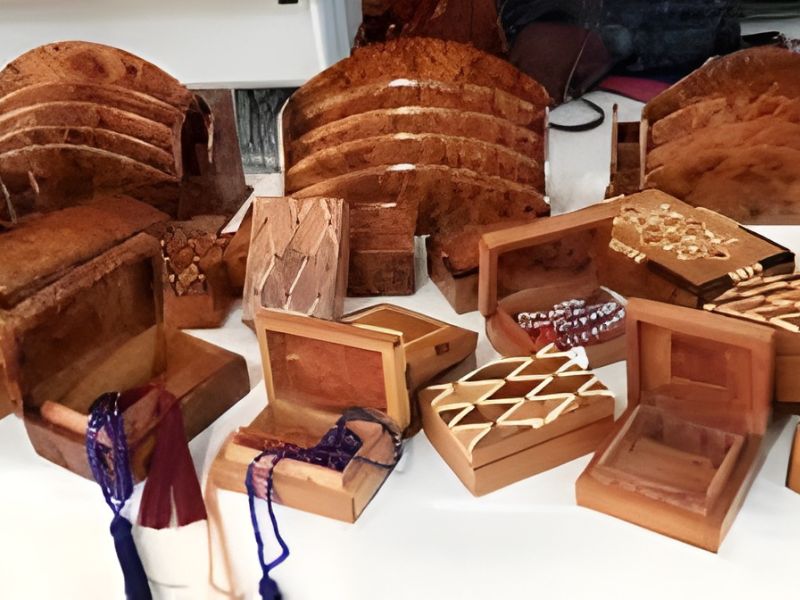

In the mist-shrouded forests of the Middle Atlas and the rugged hills surrounding the Atlantic port of Essaouira, grows a tree that exists almost nowhere else on Earth. The Thuya (Tetraclinis articulata) is more than just timber; it is the aromatic soul of Moroccan craftsmanship.
Known as “Citron Wood” by the Romans and prized by royalty for centuries, Thuya is the star of Essaouira’s artisan scene. Walking through the city’s ancient skala, the air is thick with its peppery, resinous scent—a perfume that signals you’ve entered the world of the master woodcarvers.
Thuya is a coniferous tree from the cypress family, unique to the Maghreb. While the wood from the trunk is beautiful, the true treasure lies beneath the earth: the Burl (the root).
🏺 The Root of Beauty: Trunk vs. Burl
Artisans in Essaouira distinguish between two parts of the tree, each offering a different aesthetic:
- The Trunk: Produces a light, straight-grained wood, often used for larger structures or the base of boxes.
- The Burl (Arar): This is the “gold” of the forest. The root grows in twisted, knotted patterns, creating a wood dense with “eyes” (small dark spots) and swirling grains. It is incredibly hard to work with, requiring years of apprenticeship to master.
🛠️ The Craft: Marquetry and Inlay
The master Souiris (artisans of Essaouira) are world-renowned for their precision. A single Thuya box often features:
- Marquetry: The art of fitting different pieces of wood together like a jigsaw puzzle to create geometric patterns.
- Inlays: Thuya is often paired with Lemonwood (for a creamy white contrast), Ebony, or even Mother of Pearl and silver threads.
- The Finish: Unlike mass-produced furniture, authentic Thuya is hand-polished with a mixture of sandarac resin and alcohol, or simply buffed with wax to let its natural oils shine.
📍 Why it’s the Ultimate Souvenir
Every piece of Thuya is a functional work of art. From the famous “Magic Boxes” (which require a secret movement to open) to intricate chess sets and sleek mid-century modern bowls, owning a piece of Thuya is owning a fragment of the Moroccan forest. Even after years, a quick rub of the wood will release that signature, spicy aroma.

Leave a comment