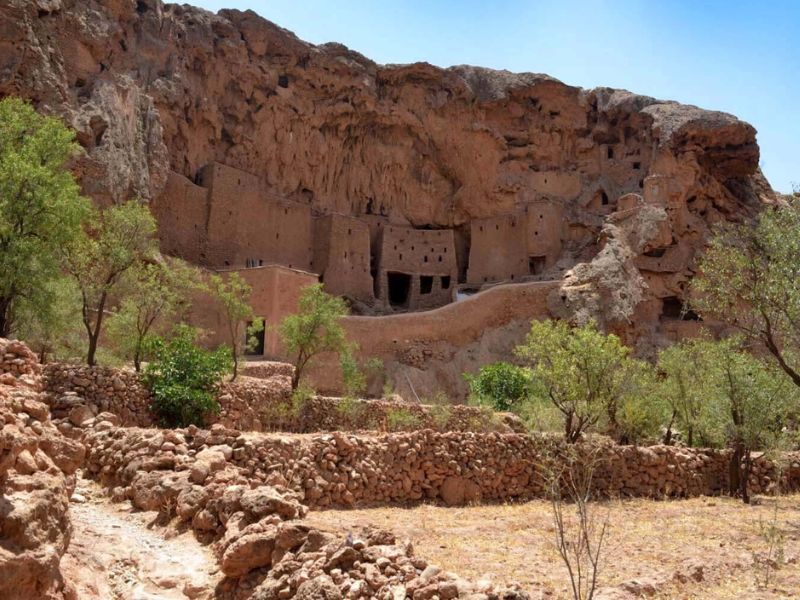

In the dramatic heart of the Anti-Atlas, where the scorched cliffs of the Jbel Bani range overlook the lush green ribbon of the Aguinane Oasis, sits a monument to ancient survival: the Ifri Granaries (Agadir n’Ifri).
For history lovers, this isn’t just a site; it’s a time capsule. These “stone banks” represent one of the most sophisticated communal survival strategies ever devised by man, nestled in one of the most beautiful vertical oases in North Africa.
High above the date palms, the Ifri Granaries are carved directly into the limestone cave walls (Ifri means “cave” in Tamazight). For centuries, these structures served as the communal treasury for the local Berber (Amazigh) tribes.
🏺 The World’s First Banking System
Long before modern banking arrived in Morocco, the tribes of the Aguinane oasis developed the Agadir (communal granary).
- A Sacred Trust: The granary was more than a warehouse; it was a neutral, sacred space. Each family owned a locked cell (room) where they stored their most precious assets: barley, wheat, dates, olive oil, and even legal documents like marriage contracts and land deeds.
- Architecture of Defense: The Ifri Granaries are masterpieces of camouflaged architecture. Using stone, wood, and clay that perfectly match the cliff face, they were nearly invisible to marauding tribes from a distance.
- Natural Preservation: The elevation and the dry mountain air provided a natural “refrigerator” effect, allowing grain to be stored and remain edible for decades—a vital insurance policy against the frequent desert droughts.
🧭 What the History Lover Will Discover
1. The “Labyrinth” of Cells
As you climb the narrow, ancient steps to the granary, you enter a maze of stone corridors. Each wooden door is a work of art, often featuring ancient “lock and key” systems made of wood that still function today.
2. The “Amine” (The Guardian)
Historically, the granary was overseen by a trusted guardian called the Amine. He lived on-site, ensuring that the tribal laws (L’aârf) were followed. Today, you can still meet local elders who hold the oral history of which family occupied which cell for generations.
3. A Bird’s Eye View of Aguinane
Standing on the wooden balconies of the Ifri Granaries provides a staggering perspective of the Aguinane Oasis below. You can see the multi-layered irrigation system (the Khettaras) and the vibrant green fields that these granaries were built to protect.
4. Prehistoric Echoes
The region around Aguinane is rich in prehistoric history. Near the granaries, keep an eye out for ancient rock markings and the ruins of “troglodyte” dwellings that suggest this cliffside has been inhabited for thousands of years.

Leave a comment