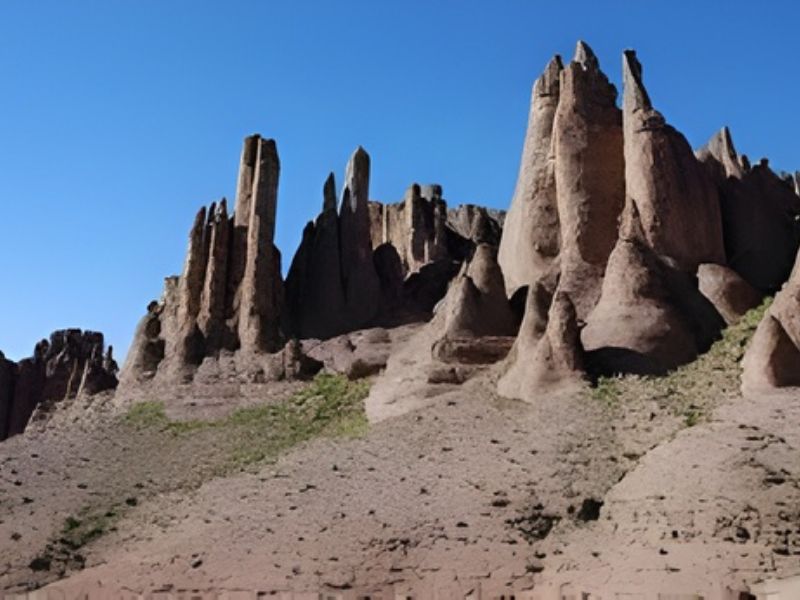

If you want to experience the raw, untamed soul of the Moroccan south, you have to leave the paved roads behind and enter Jbel Saghro.
Situated between the High Atlas and the edge of the Sahara, this is a landscape of fire and stone. Sculpted by ancient volcanic activity, Jbel Saghro (the “Mountain of Drought”) is a surreal world of jagged black pinnacles, deep basalt gorges, and vast plateaus. But more than its geography, it is the home of the Ait Atta, the legendary nomadic tribe that has traversed these paths for centuries.
Trekking in Jbel Saghro is unlike any other mountain experience in Morocco. While the High Atlas is defined by its green valleys and snow, Saghro is an “otherworldly” lunar landscape that feels more like the American Southwest or the Hoggar Mountains of Algeria.
🐪 The Land of the “Free People”: Meet the Ait Atta
The Jbel Saghro is the ancestral heartland of the Ait Atta nomadic confederation. Known for their fierce independence and heroic resistance against colonial forces (most notably at the Battle of Bougafer in 1933), the Ait Atta still follow the ancient tradition of transhumance.
- The Migration: Every winter, they move their herds of goats and camels from the cold High Atlas peaks to the warmer pastures of Jbel Saghro.
- The Encounter: As you trek, you will likely see their black wool tents tucked into the lee of a cliff. A highlight of any trip here is sharing a glass of “whiskey Berber” (mint tea) and learning about a lifestyle that has remained unchanged for a millennium.
🏔️ The Trekker’s Highlights
Jbel Saghro is best explored over a 5 to 7-day trek, usually starting from the village of Tagdilt (north) and ending in N’kob (south).
1. Bab n’Ali (Ali’s Gate)
The most iconic landmark in the range. These two towering rock pinnacles stand like giant sentinels guarding the valley. The surrounding landscape of “organ pipe” formations and “camel head” rocks makes it a photographer’s paradise.
2. Kouaouch Summit (2,592m)
While not the highest peak in the range (that honor goes to Amalou n’Mansour), Jbel Kouaouch offers the most spectacular panoramic views. From the summit, you can see the snow-capped High Atlas to the north and the hazy golden line of the Sahara to the south.
3. Igli & the Rock Pinnacles
The small hamlet of Igli is nestled among bizarre rock formations. It feels like a secret world, with almond orchards tucked into the crevices of giant stone fingers.
4. The Gorges of Afourar
Walking through the narrow, high-walled gorges of Afourar offers a refreshing change from the open plateaus. Here, you’ll find small oases of oleander and hidden pools of water.
🗓️ Best Time to Visit
Because it is lower and drier than the High Atlas, Jbel Saghro is the perfect winter trekking destination.
- Prime Season: October to April.
- Avoid Summer: From June to September, the heat is intense and the mountain springs often dry up.

Leave a comment