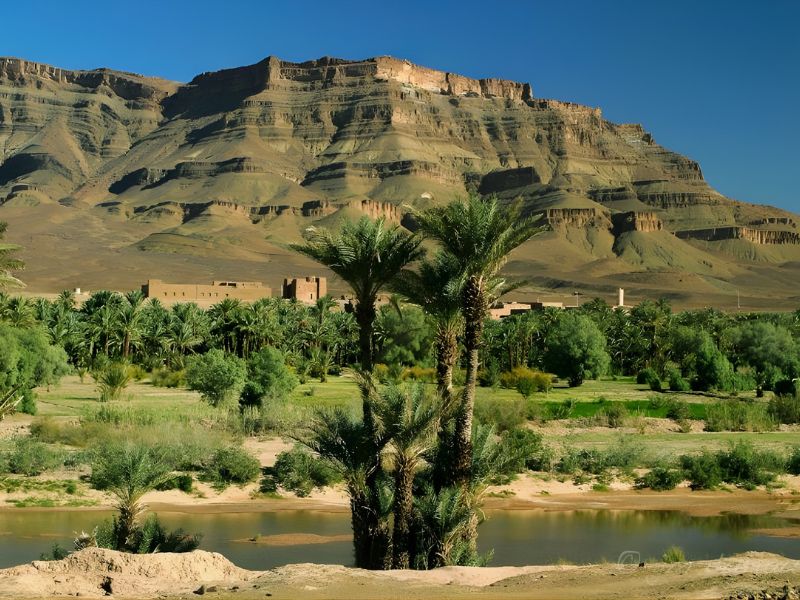

Imagine a ribbon of vibrant green snaking for hundreds of kilometers through a rugged, ochre landscape. This is the Draâ Valley, Morocco’s longest and most magnificent oasis. Born from the majestic waters of the Draâ River, this valley is a breathtaking tapestry of ancient fortified villages (ksour), sprawling date palm groves, and a history as rich and deep as its fertile soil.
Connecting the High Atlas Mountains to the edge of the Sahara, the Draâ Valley offers a journey into the heart of authentic Berber culture and an unmissable part of your 7 Days in Morocco.
📍 Geography: Where Water Meets the Desert
The Draâ River is truly the lifeline of the valley. Originating in the High Atlas Mountains, it flows for over 1,100 kilometers (680 miles), forming a vast, sinuous oasis before eventually disappearing into the sands of the Sahara.
- The Oasis: This is not just a single palm grove; it’s a series of interconnected oases. The sheer scale is astounding, creating a stark contrast between the vibrant agriculture and the arid desert surroundings.
- Volcanic Rock: The landscape is dotted with dark, ancient volcanic rock formations, adding dramatic texture to the otherwise flat plains.
🌿 Nature & Agriculture: The Gifts of the River
The Draâ Valley is an agricultural marvel, sustained by ingenious ancient irrigation systems:
- Date Palms: Millions of date palms dominate the landscape, producing some of Morocco’s finest dates. The harvest season is a vibrant, communal affair.
- Crops: Beneath the palms, farmers cultivate a variety of crops, from alfalfa for livestock to henna, cereals, and vegetables.
- Wildlife: The river and its surrounding wetlands attract a surprising array of birdlife, making it a quiet haven for birdwatchers.
🏰 Tourist Attractions & Exploration
The valley is a treasure trove of history and culture, making it ideal for slow travel and discovery:
1. Zagora: The “Gateway to the Sahara”
- What to See: Famous for its iconic sign: “Timbuktu 52 days by camel.” Explore the bustling weekly market and the ancient Jewish quarter.
- Activity: Many desert treks, including those to the massive Erg Chigaga dunes, start from here.
2. Tamnougalt Kasbah (Agdz)
- What to See: One of the oldest and most impressive Kasbahs in Morocco, dating back to the 16th century. It offers a glimpse into the architectural ingenuity and defensive strategies of the past.
- Activity: Wander through its labyrinthine passages and imagine the life of the Sultan’s court.
3. Ksour & Berber Villages
- What to Explore: The valley is dotted with hundreds of fortified villages (ksour), many still inhabited. Unlike the famous Ksar Ait Benhaddou, these are less touristy, offering an authentic insight into traditional village life.
- Activity: Take a guided walk or a bike ride through the palm groves to discover these hidden gems and meet local artisans.
4. Ancient Rock Carvings
- Historical Significance: Around the areas of Foum Chenna, you can find prehistoric rock carvings depicting animals and human figures, revealing the valley’s ancient past as a green savannah.

Leave a comment