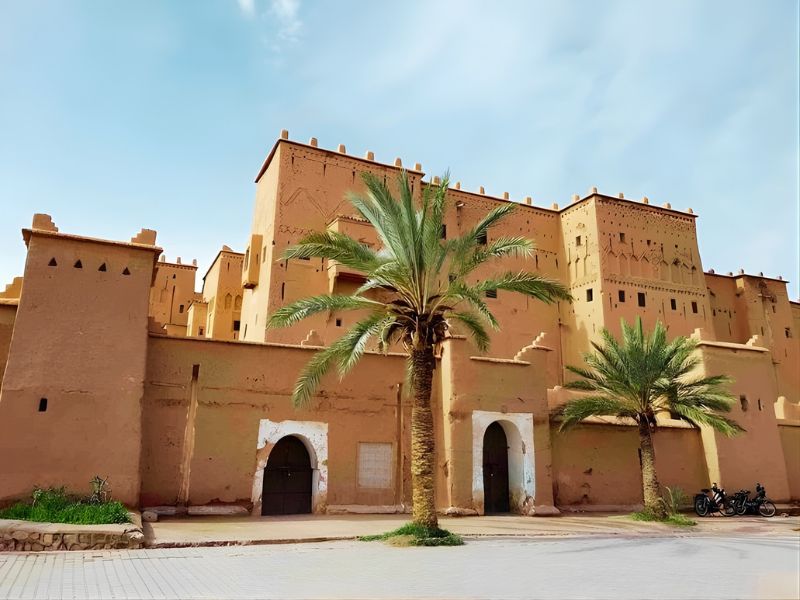

If the Sahara is the heart of Morocco, the Kasbahs are its bones. These majestic, sand-colored fortresses rise out of the palm groves like giant sandcastles, serving as symbols of power, defense, and the incredible resilience of Berber engineering. Built entirely from pisé (rammed earth, clay, and straw), these structures are designed to keep the desert heat out and the history in.
🧭 Kasbah vs. Ksar: What’s the Difference?
Travelers often use these terms interchangeably, but they are quite different:
- The Kasbah: Traditionally the fortified residence of a single powerful family or a local leader (like a castle).
- The Ksar: A fortified village. It is a collection of houses, granaries, and mosques surrounded by a high wall with watchtowers (like Ksar Ait Benhaddou).
🏛️ The “Big Three” Kasbahs You Must See
1. Kasbah Amridil (Skoura)
Found in the heart of the Skoura Oasis, this 17th-century masterpiece is so iconic, it is featured on the Moroccan 50-dirham note. It remains one of the best-preserved examples of mud-brick architecture in the country.
- The Secret: Look for the ancient olive oil press and the traditional bread ovens still inside.
2. Kasbah Taourirt (Ouarzazate)
Once the residence of the powerful Glaoui clan, this sprawling complex is a labyrinth of nearly 300 rooms. The interior is surprisingly lavish, featuring painted cedar ceilings and intricate stucco work that rivals the palaces of Marrakesh.
3. Kasbah Telouet (High Atlas)
Hidden off the main road between Marrakesh and the desert, Telouet is a hauntingly beautiful ruin. While the exterior is crumbling back into the earth, the interior “harem” rooms are decorated with some of the finest zellij and marble in the world.
🧱 The Art of Rammed Earth
Why mud-brick? In the harsh climate of the Todra Gorge and the Sahara, stone is scarce and heat is brutal.
- Natural Insulation: The thick clay walls act as a thermal battery, keeping the interior cool in 40°C heat and warm during freezing desert nights.
- Ephemeral Beauty: Because they are made of earth, Kasbahs require constant maintenance. If abandoned, they slowly melt back into the landscape, returning to the ground from which they were built.

Leave a comment