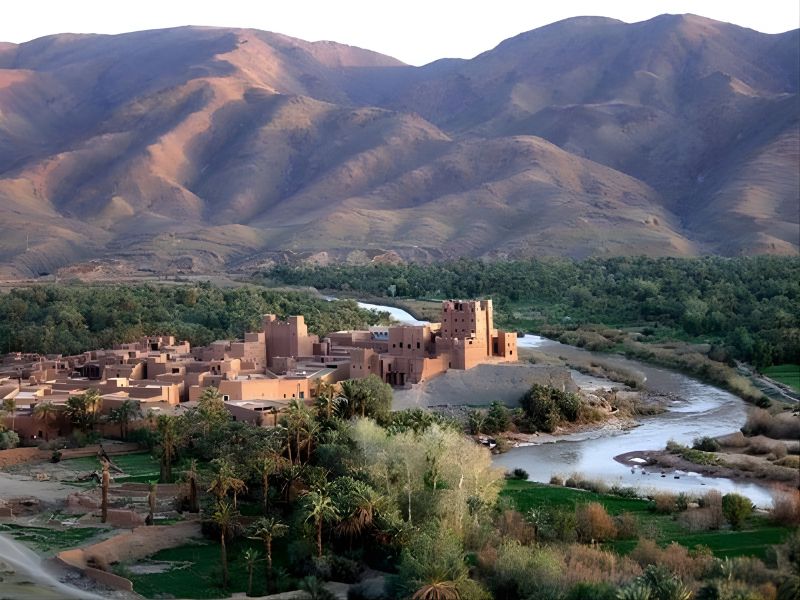

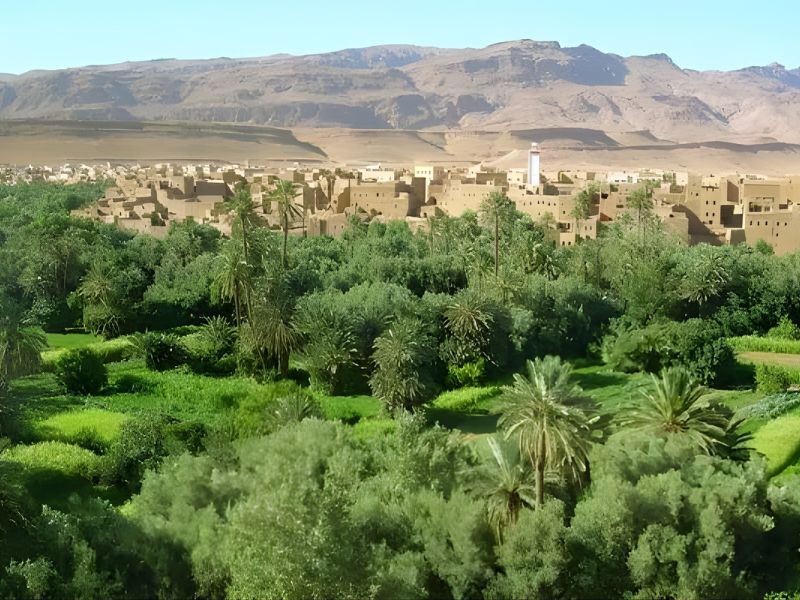
The name Tafilalt resonates with both history and adventure. Nestled in the southeast of Morocco, this vast oasis region is much more than a collection of palm groves; it is a profound historical junction. For centuries, the Tafilalt was the terminus of powerful trans-Saharan trade routes and, critically, the secluded stronghold from which the Alawite Dynasty—Morocco’s current ruling house—first rose to power in the mid-17th century.
Today, the Tafilalt is where the majesty of the Atlas Mountains gives way to the golden expanse of the Sahara.
📜 A History Written in Dates and Gold
The Tafilalt’s strategic importance stems from its unique geography: a massive, life-sustaining oasis in an otherwise arid environment.
- The Sijilmasa Crossroads: The historical heart of the Tafilalt was the legendary city of Sijilmasa, founded in the 8th century. Located near present-day Rissani, Sijilmasa became the crucial northern terminus of the trans-Saharan trade network. Gold, salt, and enslaved people were traded here, making it one of the wealthiest and most important medieval cities in North Africa.
- The Rise of the Alawites: While the major western cities of Morocco fractured in the 17th century, the Tafilalt remained relatively stable. Its strategic isolation allowed the Alawite Sharifs (descendants of the Prophet Muhammad), including Moulay Ali Cherif, to establish a spiritual and political base free from immediate urban conflict. The dynasty consolidated power here before successfully unifying the rest of Morocco.
- The Oasis Economy: For millennia, the region’s economy has been tied to its extensive palm groves. The Tafilalt is famous for its dates, which remain a vital local product and a key export.
🏜️ Touristic Attractions: The Desert Gateway
The Tafilalt region offers a blend of historical ruins and stunning natural beauty, making it a must-visit for adventure and history lovers.
- Erg Chebbi (The Golden Dunes): The Tafilalt is the main access point to the breathtaking Erg Chebbi, a spectacular sea of dunes reaching heights of up to 150 meters. Towns like Merzouga and Hassilabied are the jumping-off points for camel treks, 4×4 tours, and unforgettable nights spent glamping under the brilliant desert stars.
- The Ruins of Sijilmasa: Located near the market town of Rissani, these extensive but heavily eroded ruins offer a powerful sense of history. Though little remains standing, walking through the site provides a tangible connection to the region’s medieval commercial peak.
- The Kasbahs and Ksars: The region is dotted with majestic fortified mud-brick villages (ksour), which served to protect the oasis communities. Ksar Abbar and the surrounding villages showcase the unique architecture developed to cope with the desert climate and defense.
📈 Tafilalt Today: Tradition Meets Modernity
The Tafilalt is a region defined by its resilience and ongoing development:
- A Center of Tradition: The Tafilalt proudly maintains the Hassani-Berber cultural blend. The weekly souk in Rissani is a vibrant market where local dates, crafts, and livestock are traded, offering an authentic glimpse into the daily life of the oasis.
- Modern Infrastructure: Driven by renewed governmental focus, the region benefits from improved roads, tourism infrastructure, and agricultural investments, ensuring the continued viability of the date palms and the growth of eco-tourism.
- Gateway to the South: Today, the Tafilalt serves as the definitive southern frontier before the vast, open desert begins, connecting travelers to major routes heading deeper into the Sahara.
The Tafilalt is a testament to the fact that power and history can be born even in the most remote landscapes. It is a mandatory stop for anyone seeking to understand the historical roots of Morocco’s present while embracing the thrill of the desert adventure.

Leave a comment