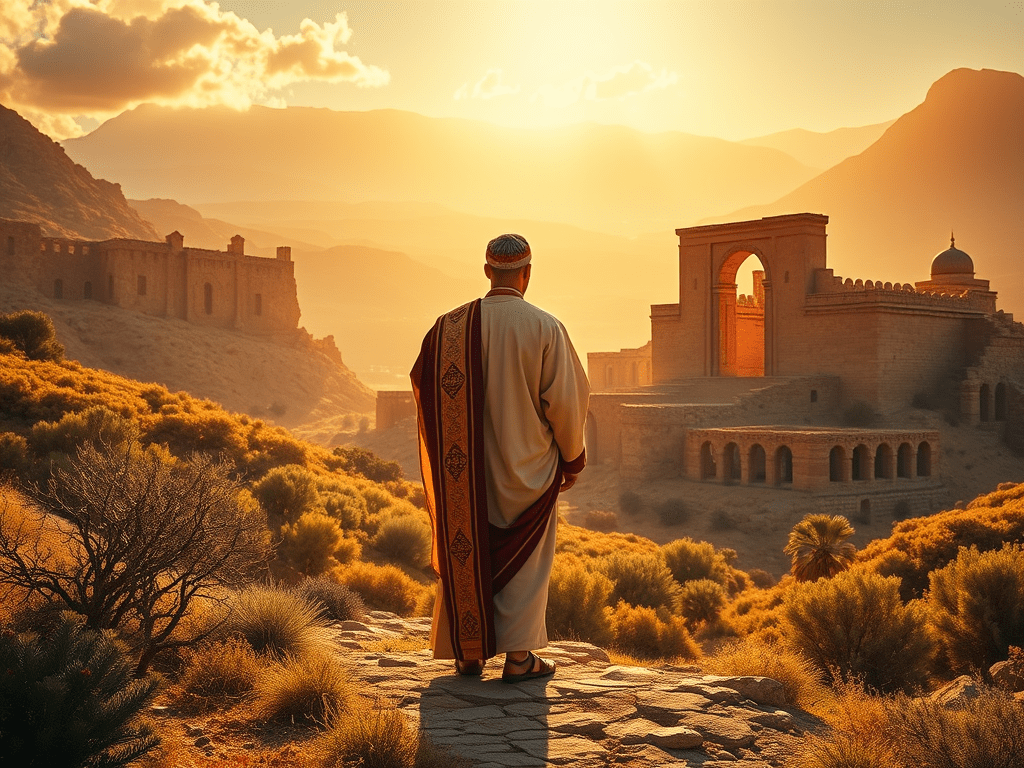


When we look at Morocco today – its vibrant culture, its deep Islamic roots, and its proud sense of nationhood – it’s easy to get lost in the rich tapestry of dynasties and empires that have shaped it. But to truly understand where this captivating country began, we must turn our gaze to the late 8th century and the dawn of the Idrissid dynasty.
This period isn’t just one chapter among many; it’s the foundational story of Morocco’s very existence as an independent Islamic state, firmly rooted in ancient lands and spiritual lineage. It laid down the essential building blocks that would define its future for centuries to come.
A Sanctuary Found: Walili, Zerhoun, and the Birth of a New Nation
Before the Idrissids, the region we now call Morocco was largely a collection of independent Berber tribes, loosely under the influence of distant caliphates in the East. Islam had arrived, but a unified, strong Islamic state centered in the Maghreb al-Aqsa (the Far West) had not yet emerged.
Enter Idriss ibn Abdallah al-Kamil. A direct descendant of the Prophet Muhammad, Idriss fled persecution from the Abbasid Caliphate in Baghdad and found refuge in the Maghreb. His journey brought him to Walili (Volubilis), the ruins of a once-thriving Roman city. This choice of arrival point is symbolic: it represents a transition, a new Islamic order rising from the ashes of an older civilization.
From Walili, Idriss moved to the nearby Mount Zerhoun (Jbel Zerhoun), a strategic and historically sacred mountain region. Here, his noble lineage, combined with his charisma and a genuine desire for self-rule among the powerful local Berber tribes (particularly the Awraba), led to a pivotal moment: they pledged allegiance to him, recognizing him as their leader, or Imam. This fertile and defensible mountainous area became the cradle of the nascent Idrissid state.
This was revolutionary. It marked the first time a local, independent Islamic state was established in Morocco, firmly cutting political ties with the powerful Eastern empires and setting Morocco on its own distinct historical path. Today, the Mausoleum of Moulay Idriss Zerhoun, located in the charming town of Moulay Idriss Zerhoun nestled on the slopes of the mountain, stands as a revered pilgrimage site, testament to the enduring spiritual significance of Idriss I and the dynasty he founded.
Building the Future: The Founding of Fez and a Unique Identity
Idriss I’s reign was tragically cut short in 791 AD, reportedly by an Abbasid emissary, but his vision was carried on by his posthumous son, Idriss II. It was under Idriss II (r. 807-828 AD) that the Idrissid state truly began to flourish and solidify its identity, moving beyond the initial base at Zerhoun.
Perhaps their most enduring legacy is the founding and development of the city of Fez. Idriss II recognized the need for a new, central capital that could unite the various tribes and serve as a hub for trade, learning, and governance. Fez quickly became a vibrant metropolis, drawing in waves of Arab immigrants fleeing unrest in Spain (Al-Andalus) and Tunisia (Qayrawan).
This influx of Arab population into a predominantly Berber land was crucial. It contributed significantly to the unique Arab-Berber cultural synthesis that defines Morocco to this day – a blend of languages, traditions, and artistic expressions that makes the country so rich and diverse. Fez, born under the Idrissids, would eventually become one of the most important intellectual and spiritual capitals of the Islamic world, a direct result of their foundational vision.
More Than Just Rulers: Shaping Morocco’s Core Identity
The Idrissids’ impact extended beyond political independence and urban planning, laying down fundamental aspects of Moroccan identity that persist:
- Deepening Islamization: Their very presence, as descendants of the Prophet, lent immense religious legitimacy to their rule, contributing significantly to the deeper and more widespread adoption of Islam across the diverse Berber tribes. This period firmly cemented Islam as the dominant religion in the region.
- Laying Administrative Foundations: They established early forms of state administration, taxation, and military organization, rudimentary but essential steps towards a functioning state. This marked a shift from purely tribal governance to a more centralized political structure.
- Precedent for Future Dynasties: Although the Idrissid dynasty eventually fragmented and declined due to internal divisions and external pressures (particularly from rising powers in the East like the Fatimids), their existence set a crucial precedent. They showed that an independent, unified state could exist in Morocco. This paved the way for subsequent powerful Berber dynasties like the Almoravids and Almohads, who would build upon this foundation to create vast empires that stretched across North Africa and into Al-Andalus. The Idrissids demonstrated the viability of a Moroccan state distinct from the eastern caliphates.
The Enduring Legacy: Why They Matter for Moroccan History
While their direct rule ended by the early 10th century, the Idrissid dynasty’s place in Moroccan history is monumental. They are remembered as the pioneers who:
- Established Morocco’s political independence from the Eastern Caliphates, setting a course for self-determination.
- Rooted this new state in significant spiritual and geographical locations like Walili and Mount Zerhoun.
- Founded the city of Fez, which remains a living testament to their foresight and a beacon of Moroccan culture and spirituality, evolving into a major center of learning and trade.
- Solidified Morocco’s Islamic identity and fostered the unique Arab-Berber cultural blend that defines the nation’s character.
To understand modern Morocco, with its distinct identity, its deep-seated Islamic traditions, and its ancient cities, you must first understand the Idrissids – and the sacred lands where their story began. They truly wrote the opening chapter of a magnificent and enduring story, setting the stage for all the powerful empires and cultural achievements that would follow in Moroccan history.
Sources & further reading:
- New World Encyclopedia, Idrisid dynasty: https://www.newworldencyclopedia.org/entry/Idrisid_dynasty
- Idrīsid dynasty | Berber Dynasty, Morocco, Maghreb – Britannica: https://www.britannica.com/topic/Idrisid-dynasty

Leave a comment