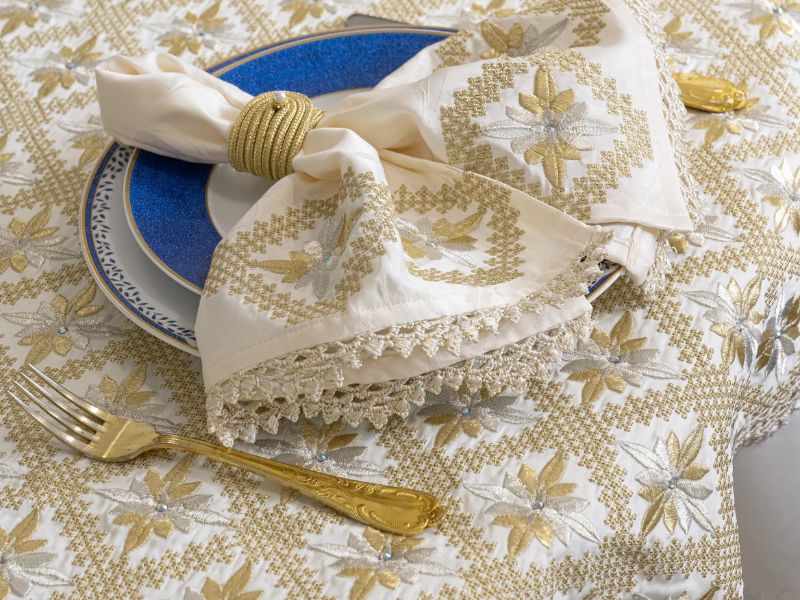

Rabat embroidery is an ancestral art passed down through generations, blending a sophisticated history with evolving textile mastery. This unique art form provides a vibrant, silky narrative that deeply reflects the history and culture of Morocco.
The History of Rabat Embroidery: The Andalusian Influence
The origins of Rabat embroidery trace back to the early 17th century, specifically 1609, following the expulsion of the Moriscos from Spain. These skilled refugees settled in Rabat, bringing with them their distinct Andalusian character and sophisticated textile knowledge, which profoundly influenced the local craft. Over the centuries, this textile art evolved, but it always retained its elegant, traditional essence.
The Distinct Styles: Old vs. Modern
Rabat embroidery is primarily classified into two influential styles:
- Old Rabat: Dating back to the 18th century, this style is known for its intricate, fine work with silk thread. It Features rare silhouettes of women with billowy skirts and raised hands, typically rendered in monochromatic schemes of yellow, red, and blue.
- Modern Embroidery: Emerging in the 19th century, this style focuses on abundant natural elements. It Highlights vegetal motifs such as flowing leaves, intricate roses, and small branches, creating a lush, organic pattern.
The Technique: Precision of the Lm’aalma
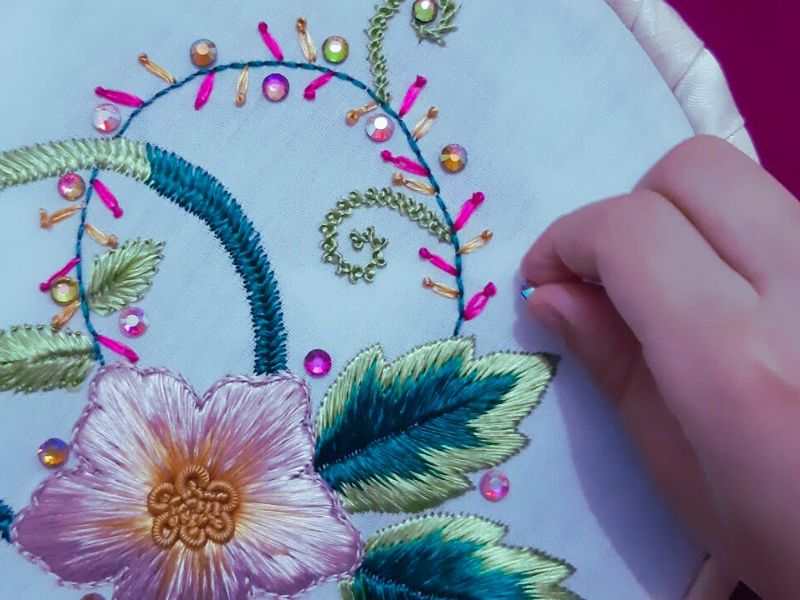
The technique of Rabat embroidery is unique and requires great precision and dedication from the embroiderer, known as the lm’aalma.
Using a rectangular frame or a well-padded cushion held on her knees, the lm’aalma meticulously follows a lightly drawn pattern on the fabric. She then fills in the empty spaces using the running stitch—a deceptively simple technique that is applied with such density and skill that it creates a stunning, richly textured effect unique to the city’s style.
Variety and Ceremonial Significance
Rabat embroidery graces a wide variety of supports, reflecting its pervasive role in Moroccan life:
- Home Decor: Found on tablecloths and napkins.
- Garment Accessories: Used on Takmissa (fabrics used to wrap caftans and precious objects) and Sebniya (scarves).
- Ceremonial Use: The embroidery is prominently displayed during grand ceremonies, including the young bride’s henna party, circumcision celebrations, and adorning the blanket of a newborn.
A Highly Valued Intangible Heritage
Moroccan embroidery, particularly that of Rabat, is a highly valued and significant component of Morocco’s rich intangible cultural heritage. This artistry is central to Morocco’s submission to UNESCO regarding the “Art, tradition and savoir-faire of the Moroccan caftan.” This dossier, currently under review for potential inscription, specifically highlights the vital role of embroiderers (ttrazate) and their distinctive regional styles, including those from Rabat, in adorning the caftan. This national commitment underscores the need to preserve and promote this unique cultural expression.
References:
- “Moroccan Textile Art” by Abdellah Taïa
- Museum of Decorative Arts of Rabat
- Contemporary Art Gallery of Rabat
🛍️ Support the Skill of the Lm’aalma
Rabat embroidery is a testament to the enduring influence of Andalusian artistry and the skill of the lm’aalma. By purchasing an authentic piece, you are investing in a centuries-old cultural legacy.
Don’t just read about this textile art—bring its history home!
Click here to find our curated guide on where to purchase authentic, high-quality Rabat embroidery textiles and support Morocco’s master artisans!

Leave a comment