

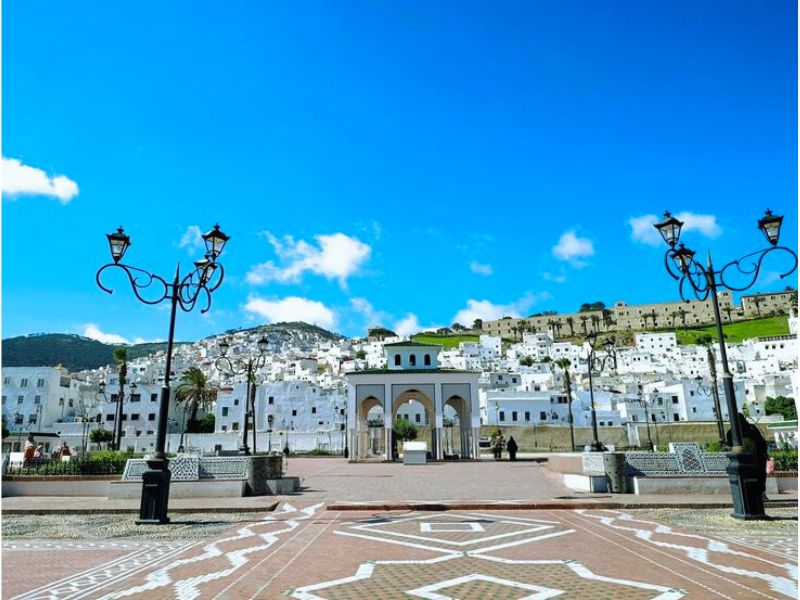
Tetouan is nestled dramatically at the foot of the Rif Mountains. It is just a stone’s throw from the Mediterranean coast. Tetouan is a city that whispers tales of two worlds. Often called “The White Dove” (La Paloma Blanca) for its gleaming whitewashed houses, Tetouan offers a uniquely enchanting experience. This distinguishes it from Morocco‘s other imperial cities. Here, the echoes of Andalusia are palpable, woven into the very fabric of its architecture, culture, and daily life.
For travelers seeking an authentic Moroccan experience, Tetouan is an unmissable destination. It is infused with a distinct Spanish-Moorish heritage. This city is truly an elegant “gateway” city.
A History of Refuge and Renewal
Tetouan’s history is deeply intertwined with the story of Al-Andalus. The city’s origins date back to antiquity. However, it was significantly re-established in the late 15th century. Andalusian refugees, primarily Muslims and Jews expelled from Spain after the Reconquista, played a major role in its re-establishment. These sophisticated exiles brought with them not just their skills and wealth. They also introduced their refined culture, architecture, and intellectual traditions. This transformed Tetouan into a flourishing center of learning and trade.
Later, during the 20th century, Tetouan served as the capital of the Spanish Protectorate in Morocco. This period left an indelible mark. It influenced the city’s modern architecture, street names, and even linguistic nuances. This created a fascinating blend of Moroccan and Spanish cultures.
Culture: A Symphony of Influences
Tetouan’s culture is a captivating fusion, distinct from other Moroccan cities:
- Andalusian Spirit: The city has a strong Andalusian character in its music. This is especially true for classical gharnati. The city’s cuisine and the refined manners of its inhabitants also reflect this character.
- Artistic Hub: Tetouan has long been a center for arts and crafts. It’s home to the National Institute of Fine Arts and is known for its vibrant art scene and numerous galleries.
- Language: While Moroccan Arabic is the primary language, Spanish is widely understood. It is spoken especially by older generations. This is a direct legacy of the Protectorate.
- Culinary Delights: The food reflects its dual heritage, offering unique dishes that blend Moroccan spices with Andalusian techniques.
Architecture: Gleaming White and Geometric Grace
Tetouan’s architecture is a key part of its allure:
- The Medina (Old Town): A UNESCO World Heritage site, Tetouan’s medina is an authentic representation of Moroccan heritage. It is considered one of the best-preserved in the country. Its compact, gleaming white houses, narrow alleyways, and seven gates are a testament to Andalusian town planning. Unlike the bustling chaos of other medinas, Tetouan’s often feels more serene, allowing for a more contemplative exploration.
- The Royal Palace: The Royal Palace dominates the beautiful Place Hassan II. It is an impressive example of modern Moroccan architecture with traditional influences. While not open to the public, its grand exterior and the adjacent grand mosque are central to the city’s public life.
- The Spanish Ensanche (New Town): The modern part of the city was built during the Protectorate. It features wide boulevards, colonial-era buildings, and charming plazas. These provide a stark yet harmonious contrast to the ancient medina.
What to Explore and Buy in Tetouan
Tetouan invites visitors to wander, discover, and immerse themselves:
- The Medina’s Gates: Enter through one of its seven historic gates. For example, you can go through Bab el-Okla. This allows you to truly step back in time.
- Souks: While less overwhelming than those in Fez or Marrakesh, Tetouan’s souks are rich in traditional crafts. Look for:
- Leather Goods: Known for high-quality leatherwork, including traditional slippers (babouches) and bags. To learn more about the Moroccan Leather Goods , see our dedicated article.
- Textiles: Beautifully embroidered fabrics and traditional clothing.
- Jewelry: Especially silver, often with intricate designs.
- Ceramics: Tetouan has its own distinct pottery style, often with Andalusian influences.
- Dar El Oddi: This is one of the medina’s most beautiful traditional houses. It is often open for visits. It offers a glimpse into historic Tetouan homes.
- Archaeological Museum: Houses artifacts from local Roman ruins and pre-Islamic periods, offering deeper historical context.
- Ethnographic Museum: Showcases traditional costumes, tools, and everyday objects, illustrating Tetouan’s unique cultural heritage.
- Visit the Tannery: Tetouan, while smaller than Fez, also has traditional tanneries. You can observe the ancient process of leather dyeing there.
Beyond the City Walls: Tetouan’s Stunning Beaches
One of Tetouan’s most delightful secrets is its incredible proximity to some of Morocco’s most beautiful Mediterranean beaches. You can take just a short drive from the city. Enjoy trading the historic medina for sun-kissed sands and turquoise waters. This trip offers a perfect blend of cultural immersion and coastal relaxation.
- Martil: A popular and lively beach resort town. It is very close to Tetouan. The town offers a long stretch of sandy beach, cafes, and restaurants.
- M’diq: Another charming coastal town with a picturesque harbor and clean beaches, perfect for families and enjoying fresh seafood.
- Cabo Negro: Known for its more upscale resorts and beautiful coastline, offering stunning views and tranquil spots.
- Oued Laou: Further east, this charming village offers a more authentic beach experience. It is less developed and nestled against the stunning Rif landscape.
These coastal havens offer opportunities for swimming, sunbathing, water sports, or simply enjoying the refreshing Mediterranean breeze.
Tetouan: A Distinct Moroccan Gem
Tetouan stands as a testament to Morocco’s rich history of migration, adaptation, and cultural fusion. Its unique Andalusian legacy, combined with its stunning white architecture and tranquil atmosphere, offers a refreshing perspective on the Kingdom. It’s a city where you can slow down. You can appreciate intricate details. You can truly feel the gentle embrace of a heritage shaped by multiple worlds.

Leave a comment