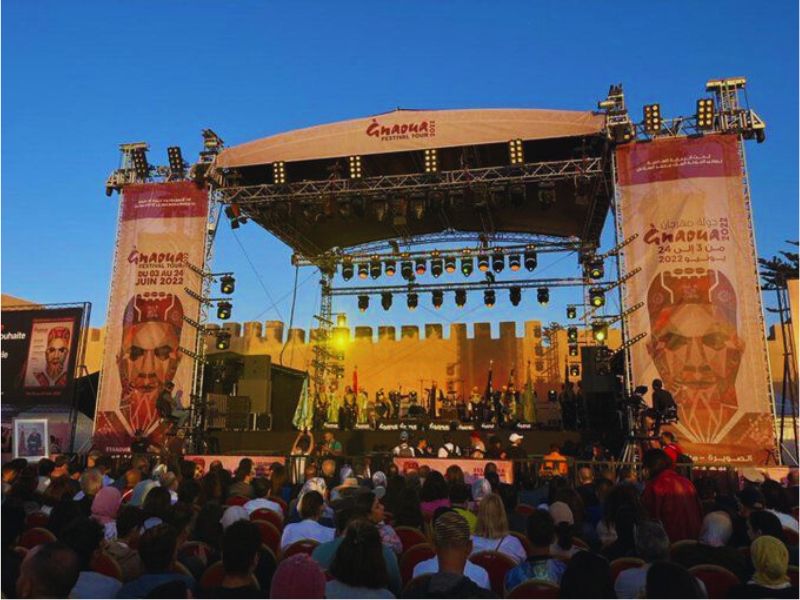


Imagine a rhythm so ancient it feels like the heartbeat of the earth. It is a sound that transports you across continents and centuries. This is Gnawa music (sometimes spelled Gnaoua), one of Morocco’s most captivating and spiritually profound musical traditions. No place is better to experience its mesmerizing power than at the annual Gnaoua and World Music Festival in Essaouira. This takes place in late June. This festival is a vibrant celebration that draws enthusiasts from across the globe.
For those eager to experience the soulful depths of Moroccan culture, Gnawa music offers a unique and unforgettable journey.
What is Gnawa Music? A Spiritual Journey in Sound
Gnawa music is the spiritual music of the Gnawa people. They are descendants of slaves, merchants, and soldiers. These ancestors were brought to Morocco from sub-Saharan Africa, particularly from regions like Mali, Senegal, and Guinea. Over centuries, their diverse African spiritual traditions combined with Moroccan Islamic practices. Their musical traditions also merged, creating a unique and powerful cultural expression.
At its core, Gnawa music is:
- Hypnotic and Rhythmic: The music is dominated by repetitive, trance-inducing rhythms. These rhythms are played on large, iron castanets called qarqab (or krakebs). A three-stringed lute known as the hajhouj (or gimbri) is also used. The hajhouj produces deep, resonant, bass-like tones that form the backbone of the music.
- Spiritually Rooted: Traditionally, Gnawa music is played during lilas (all-night communal ceremonies). These ceremonies are aimed at healing and spiritual purification. They also invite benevolent spirits. The repetitive music and dancing can lead participants into a trance-like state, seeking communion with the divine.
- Call and Response: The music is led by a maâlem (master musician). It typically features call-and-response chanting. This often invokes saints and ancestors, creating a powerful communal experience.
- Storytelling: The lyrics and chants often tell stories of the Gnawa people’s ancestral lands and their journeys. They also express their spiritual resilience and their connection to Islamic saints.
The Cultural Significance of Gnawa
Gnawa music is more than just a musical genre. It serves as a vital cultural anchor for the Gnawa community. It is also a symbol of their enduring heritage in Morocco. It represents:
- Resilience and Identity: A community powerfully expresses its identity. Their ancestors endured enslavement. This showcases their ability to preserve and adapt their traditions.
- Spiritual Healing: Its traditional role in lilas underscores its deep spiritual and therapeutic functions, bringing comfort and healing to participants.
- Cultural Fusion: It is a beautiful testament to Morocco’s historical role as a crossroads of cultures. The country blends African roots with Islamic elements. It also incorporates local Moroccan elements.
The Gnaoua and World Music Festival of Essaouira: A Global Phenomenon
Gnawa music is practiced in communities throughout Morocco. The small, windswept coastal city of Essaouira has become its global epicenter. This rise is thanks to the annual Gnaoua and World Music Festival.
Launched in 1998, the festival has grown exponentially, drawing hundreds of thousands of visitors each year. It’s more than just a music festival; it’s a celebration of fusion and dialogue, where:
- Gnawa Masters Meet Global Stars: The festival’s unique selling point is its incredible “fusions.” Renowned maâlems from Morocco collaborate with international jazz, blues, reggae, rock, and electronic artists on stage. They create spontaneous and electrifying performances. These performances transcend musical boundaries.
- Atmosphere of Joy and Discovery: The entire city of Essaouira comes alive during the festival. Stages are set up in public squares, spontaneous street performances erupt, and the Medina buzzes with an infectious energy. It’s a truly immersive experience where music spills from every corner.
- Cultural Exchange: Beyond the main stages, the festival hosts debates, art exhibitions, and workshops. These events foster a deeper understanding of Gnawa culture. They also promote cross-cultural dialogue.
- Essaouira’s Charm: The festival perfectly complements Essaouira’s laid-back, artistic vibe. It also enhances the charm of its historical Medina, which is a UNESCO World Heritage site, and its picturesque harbor. The cool ocean breeze provides a welcome respite from the summer heat.
Experiencing the Festival
Attending the Gnaoua and World Music Festival is an unforgettable experience. You can expect:
- Free Concerts: Many of the main stage performances are free to the public, making it incredibly accessible.
- Intimate Sessions: Smaller, ticketed concerts or private “lilas” offer a more intimate setting.
- Street Life: The true magic often lies in wandering the Medina. You can discover impromptu street performances. Soak in the vibrant atmosphere.
- A Diverse Crowd: A mix of Moroccan families, international music lovers, and spiritual seekers. They are all united by the power of the music.
Gnawa music, with its ancient rhythms and spiritual depth, is a fundamental root of Morocco’s cultural identity. The Essaouira festival magnificently amplifies this heritage. It transforms it into a global celebration of peace, unity, and the universal language of music. If you’re looking for a profoundly authentic and exhilarating cultural experience, let the hypnotic pulse of Gnawa draw you to the enchanting shores of Essaouira.

Leave a comment