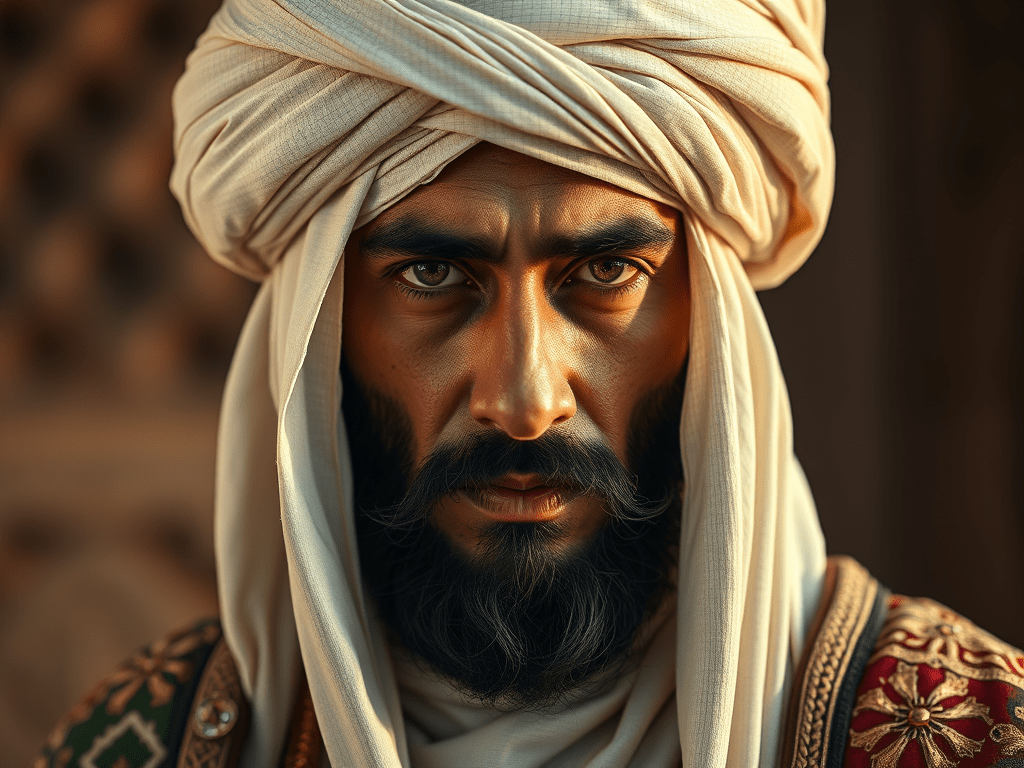

To truly understand the multifaceted tapestry of Morocco, one must delve into the stories of its imperial dynasties. Among them, the Saadian Dynasty (1510–1659) stands out as a period of remarkable renewal, military prowess, and architectural brilliance. The Saadian era is often overlooked because of the sheer longevity of other ruling houses. However, it was a pivotal chapter that deeply embedded new layers into the very roots of Moroccan identity.
To grasp the profound depth of Morocco’s heritage, it is vital to understand the Saadians. They offer a crucial piece of the puzzle. It was a time when the kingdom asserted itself on the global stage. The kingdom defended its faith and built monuments that still inspire awe today.
From Regional Power to Imperial Might
The Saadian story began not as a traditional dynasty, but as a religious and military movement. They originated from a family of sharifs in the Draa Valley. They were descendants of the Prophet Muhammad. They initially rose to prominence around 1510-1511. They established a local principality around Taroudant. They gained widespread popular support as defenders of Islam. This was against the encroaching Portuguese, who were establishing coastal enclaves in Morocco. This jihad against foreign invaders quickly garnered them legitimacy.
By 1554, Muhammad al-Shaykh, a charismatic Saadian leader, had captured Fez. This action definitively ended the Wattasid dynasty. It also consolidated Saadian control over a unified Morocco. This marked their ascendancy as the undisputed imperial power. Their capital was initially Fez. Soon, Marrakesh blossomed into their grand imperial center. It became a city they would adorn with some of its most magnificent structures.
Why Were They Called “Saadian”?
The name “Saadian” (or “Sa’di”) is derived from the Arabic word “sa’ada,” which means “happiness” or “salvation.” The dynasty claimed direct Sharifian descent from the Prophet Muhammad through his daughter Fatima and her son Hasan. This was specifically through Muhammad al-Nafs al-Zakiyya, a great-grandson of Hasan.
However, it’s also worth noting that the name may have evolved from two different perspectives:
- Their Own Claim: The Saadians likely embraced the name to emphasize their role. They aimed to bring “salvation” and “happiness” to the Moroccan people. They achieved this particularly through their successful holy war against the Christian Portuguese invaders. They also restored order.
- A Rival’s Derogatory Term (Debated): Some historians suggest that the term “Saadian” was initially used by their rivals. It was possibly used in a slightly derogatory way. This theory posits that rivals tried to deny their direct Sharifian lineage. They linked them to Halimah al-Sa’diyah, the Prophet Muhammad’s wet nurse, rather than his direct bloodline. Over time, however, the name stuck and became widely accepted.
Regardless of the precise origin, the name eventually became synonymous with a time of strong religious authority. It also signified a period of prosperity in Morocco.
A Period of Peak Power and Prestige
The zenith of Saadian power arrived with Sultan Ahmad al-Mansur al-Dhahabi (1578-1603). His reign is considered a golden age for Morocco. “Al-Dhahabi” meaning “the Golden One,” aptly describes his era, marked by:
- Military Prowess: Al-Mansur famously led a decisive victory against the Portuguese. This happened in the Battle of the Three Kings (Battle of Alcácer Quibir) in 1578. This crucial victory secured Morocco’s independence. It also projected its strength on the European stage. This led to a period of unprecedented national pride and unity.
- Expansion and Wealth: The Saadians, particularly Al-Mansur, expanded their influence southwards. They notably conquered the lucrative Timbuktu trade routes, which were part of the Songhai Empire. Controlling trans-Saharan gold, salt, and slave trade routes brought immense wealth into the kingdom. This wealth funded their lavish architectural projects. It also strengthened their military.
- Diplomatic Acumen: Al-Mansur maintained complex diplomatic relations with European powers like England and Spain. He skillfully played them against each other to preserve Moroccan sovereignty.
Architectural Legacy: The Saadian Tombs and El Badi Palace
The Saadians left behind breathtaking architectural legacies, particularly in Marrakesh, which serve as tangible reminders of their era’s grandeur:
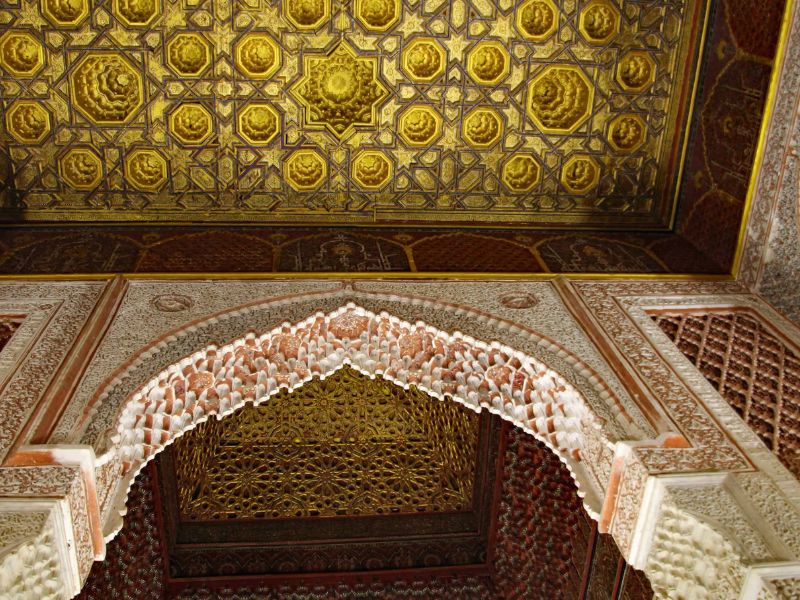
- The Saadian Tombs: Rediscovered only in 1917, these exquisite tombs are a highlight of Marrakesh. Hidden for centuries behind a wall, they house the remains of Saadian sultans and their families. Their intricate decoration features dazzling Zellij tilework, carved stucco, and monumental cedarwood ceilings. This showcases the pinnacle of Saadian artistic achievement. It also reflects a strong sense of piety. The Hall of the Twelve Columns is particularly renowned.
- El Badi Palace: Though now largely in ruins, El Badi Palace was once a sprawling complex. It was also opulent. Al-Mansur built it with the wealth from Timbuktu. It was constructed with the finest materials, such as Italian marble. It also included Sudanese gold. Its design showcases the Sultan’s immense power and global connections. Even in its ruined state, its vast courtyards and remaining structures hint at its former glory.
Cultural and Religious Revival
Beyond military might and architectural splendor, the Saadians also fostered a period of religious and intellectual revival. As sharifs, they emphasized their direct lineage to the Prophet, bolstering their spiritual authority. They commissioned religious buildings. They patronized scholars. They promoted a renewed interest in Islamic sciences and Sufism. These actions further embedded these aspects into Moroccan identity.
The Decline and End of an Era
Despite their triumphs, the Saadian dynasty eventually succumbed to internal strife, succession disputes, and external pressures. The early 17th century saw a period of instability and civil war, weakening the central authority. By 1659, they were definitively supplanted by the Alawite dynasty, who remain the ruling family of Morocco to this day.
Why the Saadian Legacy Matters Today
Understanding the Saadian dynasty is crucial for grasping modern Morocco’s roots because they:
- Cemented Marrakesh as an Imperial City: Their lavish constructions transformed Marrakesh into a key imperial capital.
- Defined Moroccan Sovereignty: Their decisive victory against European powers instilled a strong sense of national independence.
- Influenced Moroccan Art and Architecture: Their distinct artistic style, visible in the Saadian Tombs, continues to inspire.
- Strengthened Religious Legitimacy: Their Sharifian lineage reinforced the spiritual authority of Moroccan rulers.
The Saadian era was a golden age that profoundly shaped the nation’s identity. It left behind enduring symbols of power, piety, and artistic brilliance. These symbols continue to captivate visitors and define Morocco’s rich heritage.
Sources & further reading:
- 212marrakechcity website
- Saadiantombs website

Leave a comment