

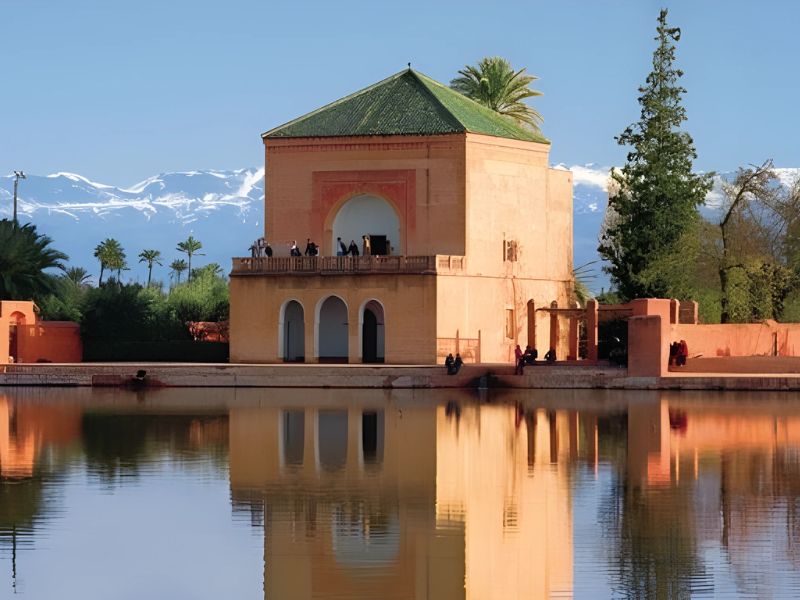
The Menara Gardens are located just a short walk from the bustling Medina of Marrakesh. They are a tranquil retreat that showcases the beauty of Moroccan architecture, landscaping, and agricultural ingenuity. This stunning 12th-century garden is a must-visit. It is perfect for anyone looking to escape the hustle and bustle of the city. Visitors can connect with nature here.
A Brief History of the menara
The Menara Gardens were created in the 12th century. This was during the Almohad dynasty under the reign of Sultan Abd al-Mu’min. The gardens were designed as a royal retreat and were later renovated and expanded by the Saadian and Alawite dynasties. Today, the Menara Gardens are one of the most popular tourist destinations in Marrakesh.
The Menara Gardens in Marrakesh are a testament to Moroccan agricultural ingenuity, particularly in their innovative irrigation system. The central pond, a key feature, plays a crucial role in this system.
Agricultural Ingenuity:
- Irrigation System: The Menara Gardens use a traditional irrigation system known as “khettara.” It brings water from underground sources to the surface.
- Water Management: The central pond serves as a water reservoir. It distributes water throughout the gardens through a network of canals and channels.
- Crop Selection: The gardens feature a variety of crops. These include olive trees, citrus trees, and other fruits. These crops are well-suited to the local climate.
Central Pond of the menara
- Water Storage: The central pond stores water, which is then distributed to the gardens.
- Aesthetic Appeal: The pond adds beauty to the gardens, creating a serene atmosphere.
- Reflection and Symmetry: The pond’s design enhances the gardens’ symmetry, reflecting the surrounding architecture and landscaping.
The Menara Gardens’ agricultural ingenuity and innovative irrigation system demonstrate Morocco’s rich history of sustainable water management and gardening practices.
The Gardens of the menara
The Menara Gardens are a masterpiece of Moroccan landscaping, featuring:
- Olive Groves: The gardens are home to over 3,000 olive trees, which provide shade and a sense of serenity.
- Fruit Trees: The gardens also feature a variety of fruit trees, including citrus and pomegranate trees.
- Central Pond: The central pond is surrounded by beautiful pavilions and offers stunning views of the surrounding gardens.
- Minbar and Pavilions: The gardens feature several pavilions, including the stunning minbar (pulpit) in the central pavilion.
The Pavilion
The central pavilion is a stunning example of Moroccan architecture, featuring:
- Intricate Tile Work: The pavilion’s walls and floors are adorned with intricate zellij tile work, featuring geometric patterns and colors.
- Carved Wood and Stucco: The pavilion’s doors, windows, and ceilings are beautifully crafted with carved wood and stucco.
- Panoramic Views: The pavilion offers stunning panoramic views of the surrounding gardens and the Atlas Mountains.
Tips and Essentials
- Best Time to Visit: Early morning or late afternoon to avoid the crowds and heat.
- Dress Code: Modest clothing is recommended.
- Photography: The Menara Gardens are a photographer’s paradise, with stunning views and beautiful architecture.
- Guided Tours: Consider hiring a guide to gain a deeper understanding of the gardens’ history and significance.
The Menara Gardens are a must-visit destination in Marrakesh, offering a serene and peaceful retreat from the bustling Medina. With its stunning architecture, beautiful landscaping, and rich history, the Menara Gardens are a true gem of Moroccan culture. Whether you’re looking to relax, learn about history, or simply enjoy nature, the Menara Gardens are an unforgettable experience.
Practical Information
- Location: Avenue Mohamed V, Marrakesh
- Opening Hours: 9:00 AM – 5:00 PM (October – April), 9:00 AM – 6:00 PM (May – September)
- Admission: Admission is free except guided tours services
- Guided Tours: Available in Arabic, French, English, and Spanish
By visiting the Menara Gardens, you’ll gain a deeper understanding of Moroccan culture. You will also appreciate the significance of Islamic architecture in the country’s history.

Leave a comment