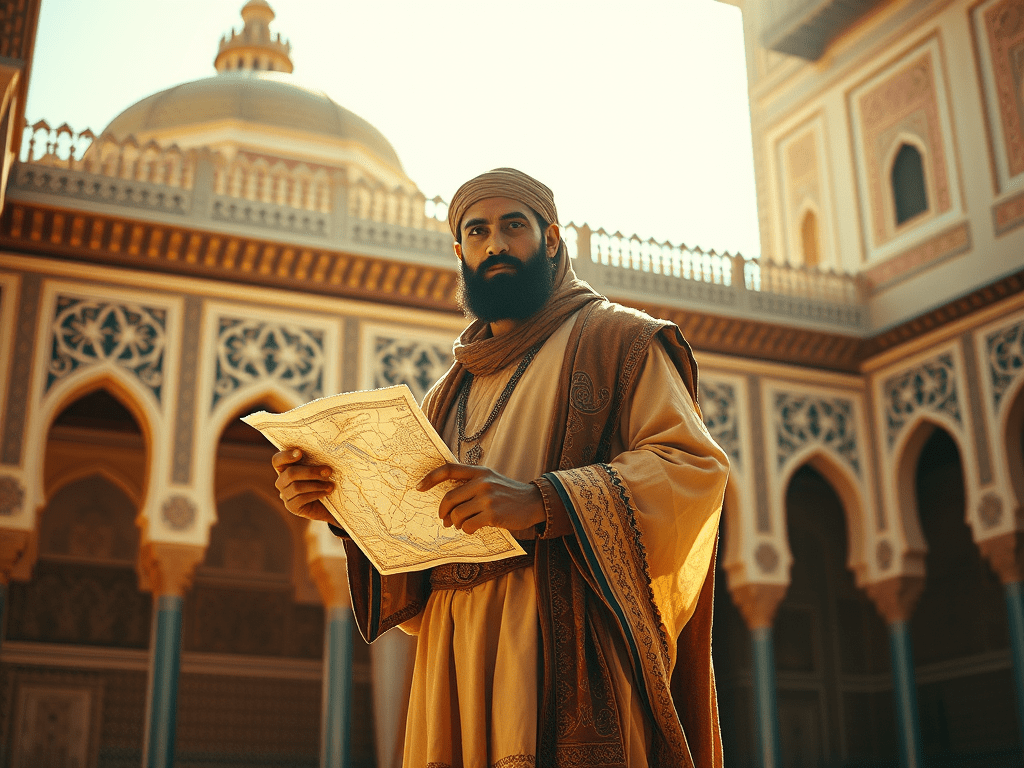

Before the age of airplanes and GPS, one man from Tangier set out on a journey that would redefine the boundaries of the known world. Ibn Battuta, a Moroccan scholar and explorer, is arguably the most prolific traveler in human history. Born on February 24, 1304, he left his home at the age of 21 and didn’t return for nearly 30 years.
His epic odyssey covered over 121,000 kilometers (75,000 miles)—surpassing even Marco Polo and Zheng He. From the mosques of Timbuktu to the palaces of China, Ibn Battuta’s life was a masterclass in curiosity, bravery, and the pursuit of knowledge.
The Call to Wander: From Tangier to Mecca
Ibn Battuta was born into a family of Islamic legal scholars (qadis). In 1325, he set off alone on a donkey with a simple goal: to perform the Hajj pilgrimage to Mecca. Little did he know that this spiritual quest would evolve into a three-decade exploration of the globe. He traveled by caravan, merchant ship, and on foot, navigating through North Africa, Egypt, and the Levant before finally reaching the Holy City.
A World Without Borders
What makes Ibn Battuta’s journey so remarkable was his ability to integrate into every society he visited. As a trained jurist, he often served as a judge (qadi) in distant lands, including the Maldives and the Delhi Sultanate in India. His travels took him to:
- The Silk Road & China: He marveled at the industrial scale of the Yuan Dynasty.
- The Swahili Coast: He visited the wealthy trading ports of Mogadishu and Kilwa in East Africa.
- The Mali Empire: He crossed the Sahara to witness the fabled wealth of Mansa Musa’s kingdom.
The Rihla: A Window into the Middle Ages
Upon his return to Morocco, Sultan Abu Inan Faris commissioned a young scholar, Ibn Juzayy, to record Ibn Battuta’s stories. The result was “The Rihla” (The Journey). This travelogue is more than just a map; it is a vivid ethnographic record of medieval life, documenting everything from the pearls of the Persian Gulf to the spices of Southeast Asia.
Legacy in Tangier
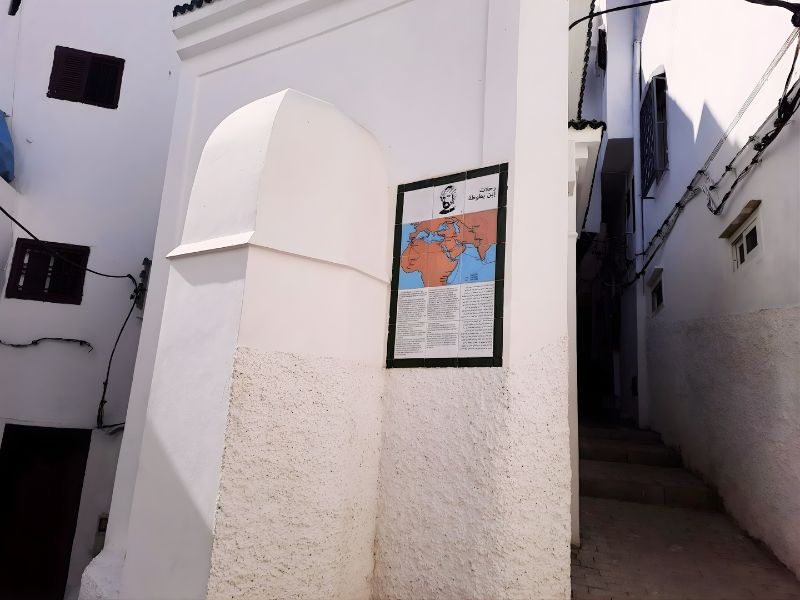
Today, the spirit of the great traveler lives on in his hometown. Travelers can visit the Mausoleum of Ibn Battuta in the Tangier Medina—a humble but powerful site that pays homage to a man whose feet touched three continents.
🧭 Follow the Footsteps of a Legend
Ibn Battuta’s story proves that travel is the best education. His courage started in the narrow streets of Tangier and reached the edges of the world.
Are you ready to start your own Moroccan Odyssey?
Don’t just read about history—walk through it! Book our “Ibn Battuta Tangier Heritage Tour” and explore the Medina through the eyes of the world’s greatest traveler. We’ll visit his birthplace, his mausoleum, and the ancient ports where his journey began.
Inspired by the Rihla? Download our “Modern Traveler’s Guide to Morocco” below, featuring 10 hidden gems that even Ibn Battuta would have loved!
References:
- “The Rihla” (The Journey): Ibn Battuta’s own travelogue

Leave a comment