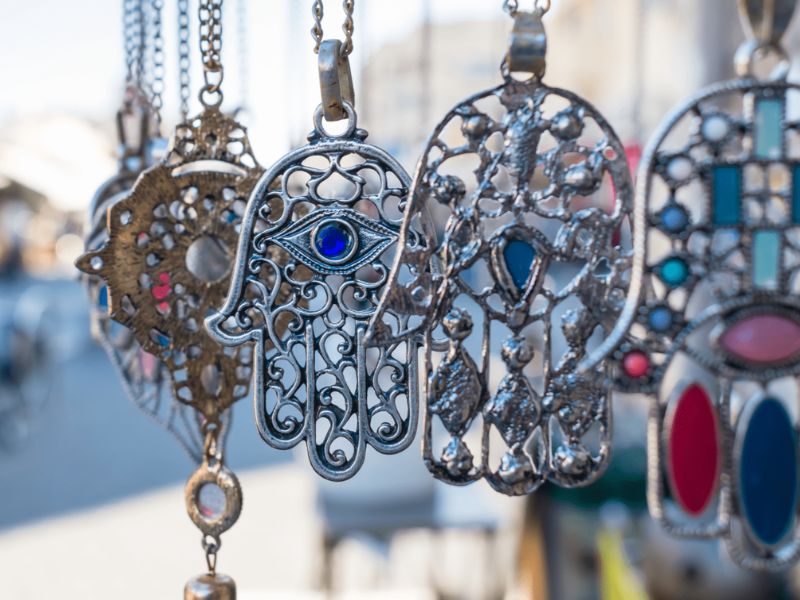

In the winding souks of Morocco, one symbol follows you at every turn: a stylized hand with five fingers, often adorned with an eye or intricate floral filigree. This is the Khmissa (also known as the Hamsa or the Hand of Fatima). More than just a beautiful pendant, it is a ubiquitous guardian—an ancient amulet that has bridged cultures, religions, and millennia to become the most iconic symbol of protection in North Africa.
📜 A Mystery of Origins
The history of the Khmissa is as layered as the silver it is forged from. While deeply rooted in modern Moroccan identity, its origins are shrouded in mystery. Many historians believe the symbol predates the major monotheistic religions, tracing back to Ancient Egypt (the Hand of Atum) and the Phoenician/Carthaginian goddess Tanit, who was the protector of Carthage and the Berber lands. Whether it represents a divine hand or a celestial alignment, its purpose has remained constant: to ward off the “Evil Eye” (Al-Ayn).
✨ Deep Symbolism and Meanings
The Khmissa is a rich tapestry of intent, reflecting the spiritual landscape of those who wear it:
- Protection and Blessings: Its primary role is to serve as a shield against negative energies and bad luck. It is believed to deflect envy and attract Baraka (divine blessing) and prosperity.
- Fertility and Abundance: In many traditions, the hand symbolizes the divine source of life, representing fertility and the abundance provided by the earth.
- The Power of Five: The number five (Khamsa) is significant across traditions—representing the five pillars of Islam, the five senses, or the five books of the Torah, all converging into a single gesture of strength.
🌍 A Symbol Shared by Traditions
The Khmissa is a rare bridge between faiths, holding sacred space in various cultures:
- Islamic Tradition: Known as the Hand of Fatima (named after the daughter of the Prophet Muhammad), it symbolizes patience, faith, and protection.
- Jewish Tradition: In the Sephardic Jewish history of Morocco, it is known as the Hand of Miriam, representing protection and good fortune. It is often decorated with the “Eye” to watch over the wearer.
- Berber (Amazigh) Roots: For the indigenous people of the Atlas and the South, the Khmissa is often integrated into heavy silver tribal jewelry, linked to ancestral spirits and the natural world.
🎨 Craftsmanship and Variations
Across Morocco, the Khmissa adapts to the local aesthetic. In Fez, you will find refined, delicate gold and silver filigree work. In the South like Tiznit, the Khmissas are often larger, made of “coin silver,” and embellished with colorful Enamel or Amber and Turquoise stones.
🛍️ A Collector’s Guide: Choosing Your Khmissa
When searching for your own “Hand of Fatima,” keep these three things in mind to ensure you are getting an authentic piece of Moroccan history:
- The Metal: Look for the “925” stamp on silver pieces. In the South (Tiznit), you will find “Coin Silver,” which has a slightly darker, more rustic patina.
- The “Maalam” Touch: Authentic Khmissas are never perfectly symmetrical; small variations in the engraving show that they were hand-carved by a master artisan.
- The Symbolism: Many modern designs incorporate an “Eye” in the center (to watch over the wearer) or a “Flower” (symbolizing the blossoming of life). Choose the one that resonates with your personal journey.
✋ Bring the Protection of the “Five” Home
The Khmissa is more than a souvenir; it is a piece of Morocco’s spiritual soul that you can carry with you every day. Whether you wear it for its ancient history or its protective energy, it is a timeless addition to any collection.
Ready to find your own authentic Moroccan Khmissa?
We have scouted the finest jewelry workshops across the Kingdom! Visit our Recommended Jewelry Collection to find hand-crafted sterling silver pendants from Fez, rustic tribal pieces from Tiznit, and modern 18k gold Hamsas—all sourced directly from trusted Moroccan artisans.

Leave a comment