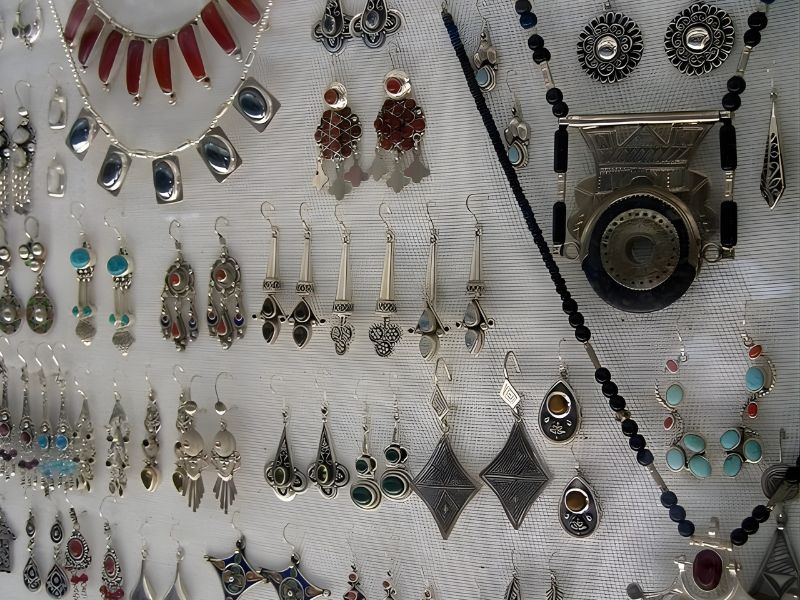

Moroccan jewelry is a captivating story told in silver and stone, a mesmerizing blend of Arab, Amazigh (Berber), and Mediterranean influences. For centuries, Moroccan artisans have perfected their craft, creating intricate, symbolic pieces that adorn the body and carry the soul of the country’s rich cultural heritage.
Let’s delve into the world of Moroccan jewelry, exploring the fundamental characteristics, the master techniques, and the unique specialties contributed by each region.
1. ✨ Characteristics and Symbolism
Moroccan jewelry is renowned for its specific material choices and profound symbolic meaning:
- Primary Material: Silver: Silver is the foundational metal of traditional Moroccan jewelry, particularly among the Amazigh communities. It is valued for its distinctive shine and elegance, and is often paired with enamel, coral, amber, or other semi-precious stones.
- Intricate Designs: Artisans are famous for using intricate patterns, geometric shapes, and floral motifs. The complexity of the design often speaks to the skill of the mâalem (master artisan).
- Profound Symbolism: Every piece of jewelry often carries symbolic meanings—not just for aesthetics, but for protection, good luck, or fertility. The most recognizable example is the Khmissa, a five-fingered hand pendant universally believed to ward off the evil eye.
2. 📿 Types and Regional Styles
The sheer diversity of Moroccan jewelry reflects the country’s varied landscape and population, creating two major stylistic traditions:
- Amazigh (Berber) Characterized by bold, heavy silver, enamel, and large coral/amber pieces. Styles are highly symbolic and often originate in the Atlas Mountains and Southern Morocco. As an example The Fibula (Tiziray) A brooch-like piece, often decorated with intricate designs, historically used to fasten clothing, symbolizing feminine identity and status.
- Urban Arab Often uses gold or fine filigree silver. Styles are highly detailed, featuring elaborate floral and calligraphic motifs, often centered in former imperial cities such as Tiznit Jewelry originating from the city of Tiznit, this renowned style uses delicate, filigree-like silver work to create intricate necklaces and bracelets.
Other notable pieces include the Agadez Cross (a traditional Tuareg cross symbolizing protection and spirituality) and the bold, colorful jewelry of Marrakesh, which blends strong African and Arab influences.
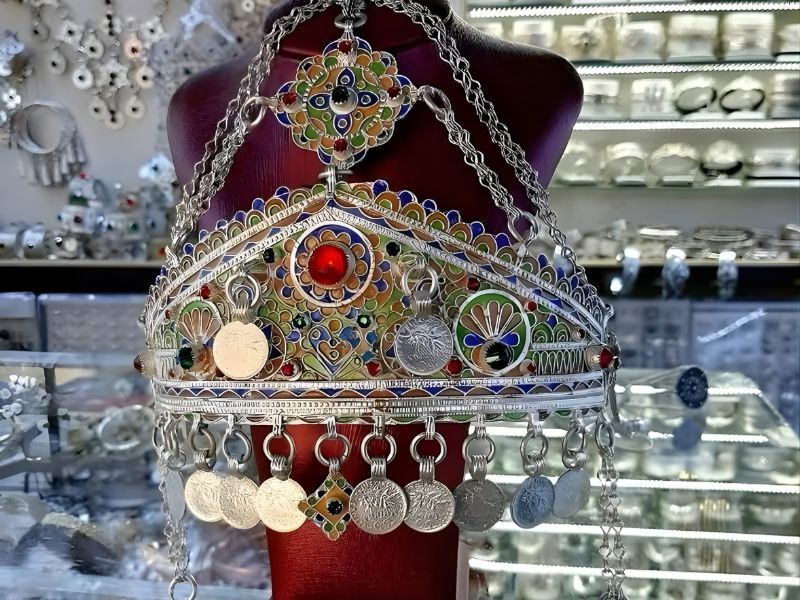
3. 🛠️ Handmade Jewelry-Making Techniques
Moroccan artisans are masters of traditional jewelry-making techniques, passed down through generations.
- Filigree: Artisans use thin, twisted threads of silver or gold to create delicate, lace-like, intricate designs. This is a time-consuming process requiring exceptional skill.
- Enameling: This technique involves applying colorful enamel (often vibrant greens, blues, or yellows) to etched metal surfaces, a technique famously associated with Tiznit and Tafraoute jewelry to add color and elegance.
- Stamping & Repoussé: Artisans use hand-stamping and hammering (repoussé) to create patterns and designs, adding texture and three-dimensional interest to the surface of the silver.
4. 🗺️ Regional Specialties
While the craft spans the nation, specific regions are recognized for their signature styles:
- Tiznit: The undisputed center for fine, delicate filigree-like silver jewelry, often featuring intricate symbolic patterns.
- Marrakesh: Famous for its bold, highly colorful pieces, often incorporating semi-precious stones and reflecting strong African and Arab influences.
- Essaouira: Specializes in jewelry featuring materials linked to the coast, such as shells, coral, and ocean-inspired motifs.
Moroccan jewelry is a true reflection of the country’s rich cultural heritage. Its intricate designs, deep symbolic meanings, and traditional craftsmanship make it a must-have for anyone who appreciates unique, handmade pieces that tell a powerful story.
🛍️ Adornment, Protection, and History
Moroccan jewelry offers more than just beauty—it offers a connection to ancient traditions of protection and cultural identity.
If you are captivated by the elegance of Tiznit silver or the powerful symbolism of the Amazigh fibula, support the preservation of this incredible artisan skill.
Ready to find a piece of Moroccan history to wear?
Click here to explore our guide on finding authentic, ethically-sourced silver jewelry and textiles from certified Moroccan artisans!

Leave a comment