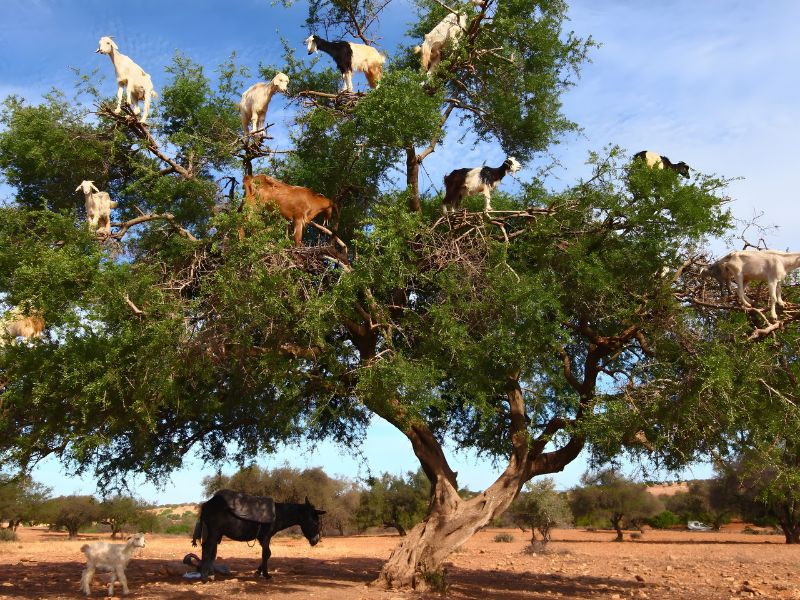

This isn’t just about the oil you find in a bottle; it’s about a UNESCO-protected Biosphere Reserve, the famous “tree-climbing goats,” and the incredible women’s cooperatives that are the backbone of this rural economy.
The Argan tree (Argania spinosa) is a prehistoric survivor. It grows nowhere else on Earth in such abundance as the semi-desert soil between Essaouira and Agadir. To the locals, it is more than a tree; it is a provider of food, shade, and a global beauty secret.
🐐 The Gravity-Defiers: Tree-Climbing Goats
One of the most surreal sights in the world is a gnarly Argan tree filled with goats perched on its branches like strange, furry fruit.
- The “Partnership”: The goats climb the trees to eat the fleshy Argan fruit. Historically, the undigested pits they left behind were collected to be processed into oil—though modern cooperatives now mostly harvest the fruit directly from the trees to ensure the highest cosmetic quality.
- A 2026 Tip: Visitors should look for wild sightings rather than “staged” roadside photo-ops to ensure they are supporting ethical, sustainable tourism.
🏺 The Gold-Standard: Women’s Cooperatives
The true magic happens inside the whitewashed walls of the women’s cooperatives.
- The Hand-Crack: Listen for the rhythmic “clack-clack” of stones. Despite modern technology, the best Argan oil is still extracted by women who manually crack each nut between two rocks—a skill passed down from mothers to daughters for centuries.
- Culinary vs. Cosmetic: A rich blog post can explain the difference between the nutty, toasted culinary oil (perfect for Amlou) and the clear, cold-pressed cosmetic oil that has taken the world’s beauty industry by storm.
🌿 A UNESCO Treasure
In 2014, the Argan forest was added to the UNESCO Intangible Cultural Heritage list. It is a fragile ecosystem that prevents the Sahara from marching further north. Visiting the forest is an education in environmental resilience and the delicate balance between man, animal, and nature.

Leave a comment