
Just 30 kilometers south of the bustling medina of Fez lies a village that feels like a whisper from another century. While most travelers follow the well-trodden path to the Swiss-style chalets of Ifrane, the savvy explorer turns toward the foothills of the Middle Atlas to find Bhalil.
Known for its pastel-pink houses, ancient cave dwellings, and a rhythm of life that hasn’t changed in generations, Bhalil is the antidote to modern “over-tourism.”
Bhalil is not your typical Moroccan town. It is a vertical labyrinth built into the side of a limestone cliff, where the line between the natural world and human architecture completely dissolves.
🏺 Living in the Earth: The Cave Dwellings
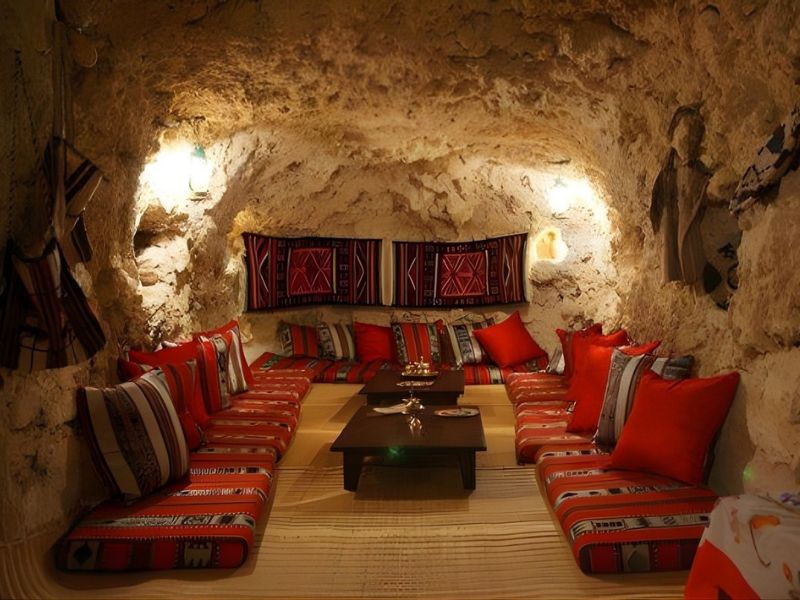
The most striking feature of Bhalil is its Troglodyte houses. These are not ruins; they are vibrant, inhabited homes carved directly into the soft limestone caves.
- A Natural Thermostat: These cave-homes stay a perfect 18°C–20°C year-round, offering a cool sanctuary during the scorching Moroccan summer and warmth during the Atlas winters.
- Tea in the Earth: Hospitality is a religion here. It is highly likely a local family will invite you into their cave-home for mint tea. You’ll see modern televisions and refrigerators sitting against walls of raw, ancient stone—a surreal blend of the Neolithic and the 21st century.
🧵 The “Buttons of Bhalil”: A Feminine Legacy
As you wander the steep, winding streets, you will notice groups of women sitting in doorways, their hands moving with lightning speed.
- The Sfifa Craft: Bhalil is the primary supplier of the handmade silk buttons (Aakad) used on every Djellaba and Caftan in Morocco.
- A Social Fabric: For these women, button-making is more than an income; it is a social ritual. They gossip, sing, and laugh while weaving intricate silk threads into the tiny globes that define Moroccan fashion.
🌊 The River and the “Oued”
The village is split by a small river (the Oued Aggai), where you can still see local women washing colorful rugs in the traditional way. The sound of running water follows you through the alleyways, adding to the village’s serene, almost meditative atmosphere.

Leave a comment