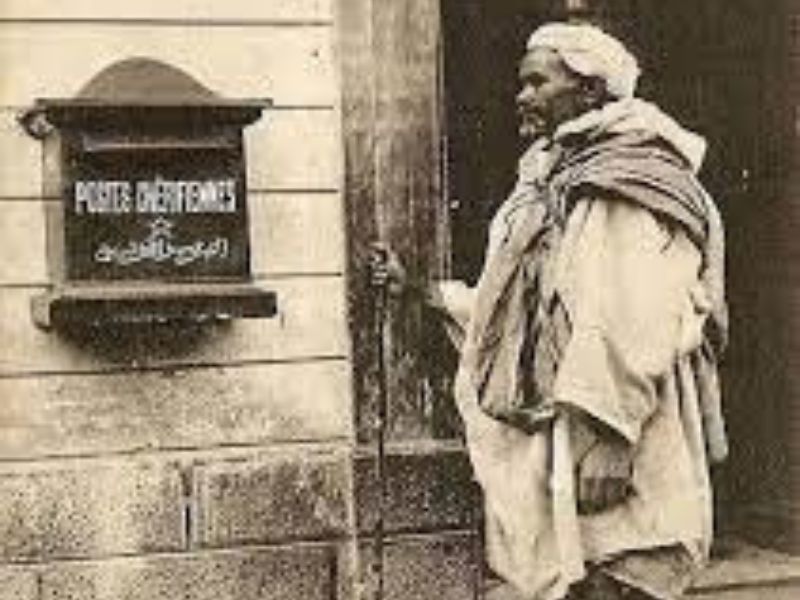

Long before the hum of telegrams and the arrival of the French postal service, the unity of the Moroccan Empire rested on the shoulders—and feet—of a single man: the Rakkas.
Clad in a simple linen tunic, carrying nothing but a staff and a leather pouch, these legendary “barefoot messengers” were the human fiber-optic cables of the 19th-century Maghreb. To see a Rakkas on the horizon was to see the news of the Sultan, the heartbeat of a nation, and the endurance of the human spirit.
The term Rakkas (plural: Rukkas) comes from the Arabic root for “to dance” or “to trot.” It perfectly describes the rhythmic, tireless pace these men maintained as they traversed some of the harshest terrains on Earth.
🏺 The Survival Kit of a Human Relay
A Rakkas didn’t have a horse or a carriage. His power was his own physiology. His “office” consisted of:
- The Chkara (Leather Pouch): A waterproof bag slung across the chest, containing the Dahir (Sultanic decrees) or private letters.
- The Staff (Matraq): Used for balance on mountain paths, protection against wild dogs, and to signal his approach.
- The Bell & Lantern: At night, the rhythmic jingle of his bell alerted villagers that a messenger was passing through, and they were legally obligated to provide him with bread, water, and a place to sleep.
- The “Bread of the Road”: Usually a handful of dried dates, some flour, and a small goat-skin water bag.
🏔️ Feats of Impossible Endurance
The Rakkas were elite athletes by necessity. A journey from Marrakesh to Fes (roughly 500km) that would take a caravan ten days was often completed by a Rakkas in just three to four days.
- Mountain Climbers: They crossed the High Atlas passes in the dead of winter, navigating snowdrifts while barefoot or wearing simple alfa-grass sandals.
- Desert Runners: In the South, they moved from well to well, navigating by the stars to avoid the midday Saharan heat.
- The Sultan’s Network: Sultan Moulay Hassan I formalized this into the Makhzen Post in 1892, establishing “Rakkas Stations” every 30-50 kilometers where messengers could hand off their pouches to the next runner.
🎨 The Cultural Legacy: From Runner to Stamp
When the first Moroccan stamps were issued, the image of the Rakkas remained a powerful symbol of national sovereignty. Even as the “barefoot post” was phased out by the 1920s in favor of bicycles and trucks, the Rakkas became a romantic figure in Moroccan folklore—a symbol of the man who literally “carried the word” of the Kingdom on his back.
To truly grasp the physical reality of the Rakkas’s grueling journey, you must see their tools in person. If you want to discover the specialized attire—from the weather-beaten leather chkara to the protective staff—or delve deeper into the ancient, intricate ways of communication that held the Kingdom together, a visit to the Barid Al-Maghrib Museum in Rabat is essential. Located in a historic 1920s building, the museum preserves the actual lanterns that lit the Rakkas’s mountain paths and the original bells that announced their arrival, offering a rare, tactile connection to Morocco’s legendary barefoot post.

Leave a comment