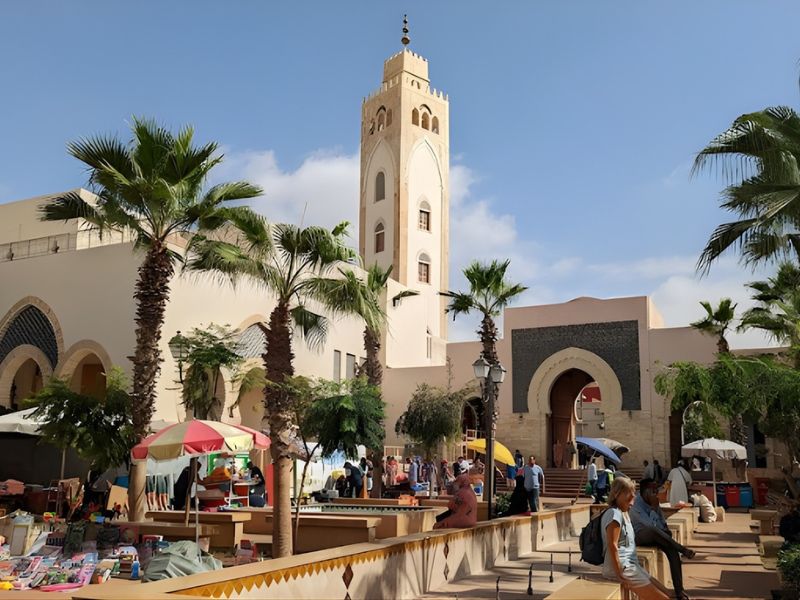

Standing on the edge of the Souk El Had in Agadir, you aren’t just looking at a market; you are staring at a massive, 13-hectare fortress of commerce. Encircled by six-meter-high walls and accessed through 13 grand gates, this is the largest urban market in Africa and the undisputed beating heart of the Souss-Massa region.
While its name, El Had, translates to “Sunday Market”—a nod to its historical origins as a weekly desert fair—today’s Souk El Had is a daily explosion of color, scent, and Moroccan resilience.
Established in its current location after the devastating 1960 earthquake, the souk was designed as a modern symbol of Agadir’s rebirth. It houses over 6,000 stalls, organized into a surprisingly navigable grid compared to the winding medinas of Marrakesh or Fes.
🏺 A City Within a City: What to Find Where
To conquer the souk without getting lost, locals use the gate numbers as coordinates. Here is your “Cheat Sheet” for the best sections:
- The Produce Heart (Gates 2 & 5): The center of the souk is a gastronomic marvel. Pyramids of citrus fruits, sacks of vibrant spices (look for authentic Saffron and Ras El Hanout), and every variety of olive imaginable fill the air with an intoxicating aroma.
- The Jewelry Heaven (Gate 9): This is the place for genuine Berber silver and gold. Look for specialized stores with government-certified rates per gram to ensure you are getting the real deal.
- Handicrafts & Artisans (Gate 7 & 8): Watch master craftsmen work with Thuya wood, weave intricate rugs, and stitch traditional leather Babouches (slippers).
- The “Liquid Gold” Section: Throughout the souk, you’ll find women’s cooperatives pressing fresh Argan Oil. Don’t miss Amlou—the “Moroccan Nutella”—a delicious spread made from argan oil, honey, and toasted almonds.
🤝 The Art of the Deal
Shopping at Souk El Had is a social contract.
- The Rule of Barter: Prices are rarely fixed (except in some official cooperatives). Start by offering about half the initial quote and work your way up with a smile.
- The Tea Invitation: If a merchant offers you mint tea, it is a gesture of hospitality. While there is no strict obligation to buy, it is considered polite to engage in conversation before moving on.
- Dress the Part: To fit in and command respect during negotiations, dress modestly (covering shoulders and knees). This often helps avoid the “tourist tax.”

Leave a comment