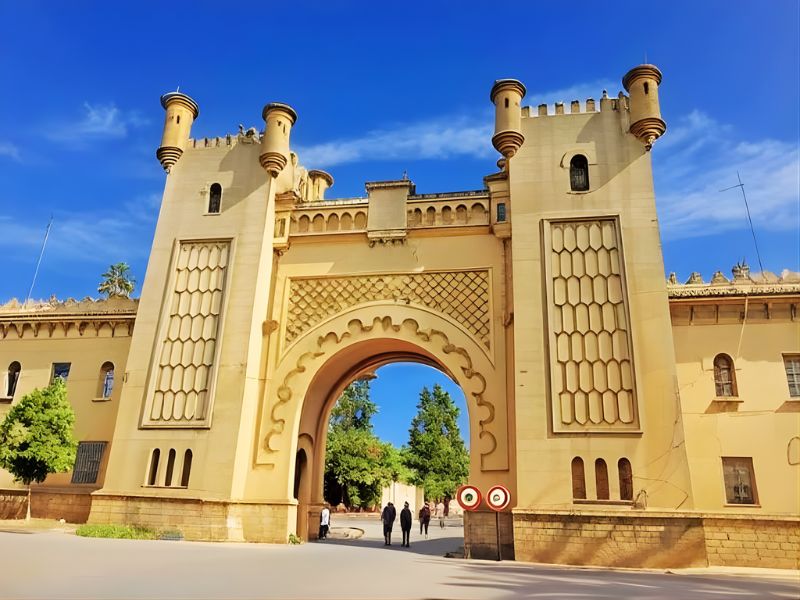

In the lush, fertile plains of the Loukkos River, where the history of empires was decided on the battlefield, lies Ksar el-Kebir. Known as the “Great Castle,” this city is one of Morocco’s most historic northern hubs—a place where ancient Roman foundations meet the echoes of the most significant battle in Portuguese and Moroccan history.
For travelers who want to skip the tourist crowds of Tangier and dive into the authentic, agricultural soul of the north, Ksar el-Kebir is a gateway to the past.
Ksar el-Kebir is a city defined by its strategic position. It has served as a vital crossroads for centuries, connecting the Atlantic coast to the imperial heartlands of Fez and Meknes.
🏺 A Walk Through Time: Roman Roots to Saadi Glory
- Oppidum Novum: Long before it was an Islamic stronghold, the city was the Roman settlement of Oppidum Novum. Today, you can still find Roman inscriptions and stones repurposed in the architecture of the Great Mosque.
- The Almohad Walls: In the 12th century, the Caliph Yaqub al-Mansur fortified the city with massive walls. While much has been reclaimed by time, the spirit of this “Great Fortress” lives on in the layout of the old medina.
- The Battle of the Three Kings (1578): Just outside the city, at Wadi al-Makhazin, one of the most famous battles in world history took place. Three kings—the Sultan of Morocco, his nephew, and the King of Portugal—all perished in a single day. This victory secured Morocco’s independence for centuries and changed the map of Europe forever.
📍 Attractions in and Around the City
1. The Great Mosque (Al-Masjid al-Aazam)
A masterpiece of Almohad and Marinid architecture. Look for the ancient Roman columns integrated into the structure—a physical bridge between the city’s pagan and Islamic eras.
2. The Battle of the Three Kings Museum
Dedicated to the monumental event of 1578, this museum offers insights into the tactics, the armor, and the geopolitical impact of the battle that halted Portuguese expansion in Africa.
3. The Loukkos River & El Makhazine Dam
For nature lovers, the banks of the Loukkos River offer a peaceful escape. The nearby El Makhazine Dam is a massive reservoir perfect for a quiet afternoon walk, surrounded by the greenery that makes this region the “sugar basket” of Morocco.
4. Day Trip: The Ancient Ruins of Lixus
Just 30 minutes away toward the coast lies Lixus, the mythical site of the Garden of Hesperides. Combine your visit to Ksar el-Kebir with a trek through these Roman and Phoenician ruins overlooking the Atlantic.
🍲 Culture & Gastronomy: The Taste of the Loukkos
Ksar el-Kebir is the heart of a rich agricultural region. The local souks are legendary for their freshness:
- Souk El Had: The Sunday market is a sensory explosion where you can find everything from handmade textiles to the region’s famous honey and citrus.
- The “Jebli” Cuisine: Try the local mountain-influenced tagines, often prepared with wild artichokes, peas, and the freshest olive oil from the surrounding hills.

Leave a comment