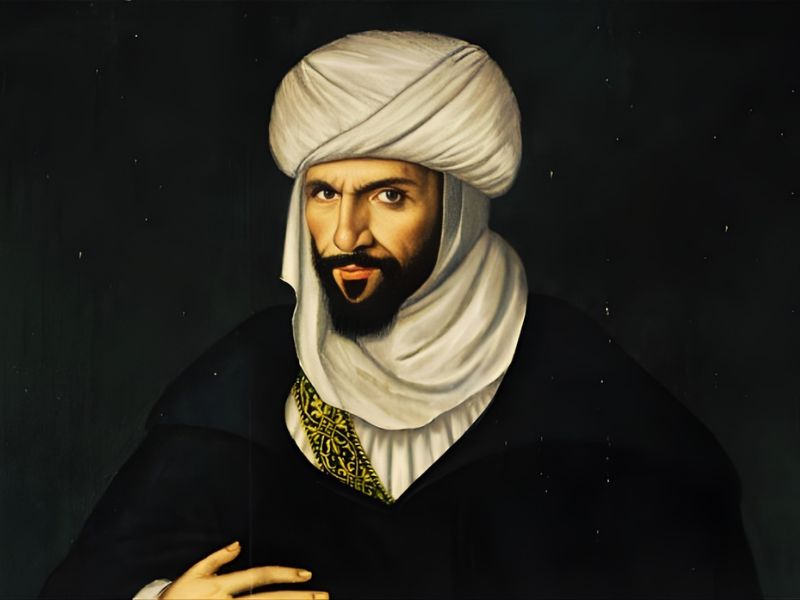

If history is a stage, then Sultan Ahmad al-Mansur was its most extravagant director. Ruling from 1578 to 1603, al-Mansur was the architect of Morocco’s “Golden Age.” A master of diplomacy, a brilliant military strategist, and a lover of luxury, his reign transformed Morocco into a global superpower that commanded respect from the Renaissance courts of Europe to the empires of West Africa.
Here is the story of the man who literally turned Morocco to gold.
⚔️ The Victor of the Three Kings
Al-Mansur’s rise to power began with a thunderclap. At the Battle of the Three Kings (Battle of Wadi al-Makhazin) in 1578, Moroccan forces crushed the Portuguese army. This victory not only secured Morocco’s independence but also provided the massive ransom wealth that Al-Mansur used to rebuild the nation. It earned him the title Al-Mansur (The Victorious).
💰 “Ad-Dahabi”: The Golden One
The Sultan’s nickname, Ad-Dahabi, wasn’t just a compliment; it was a literal description of his wealth. In 1591, he sent an expedition across the Sahara to the Songhai Empire (modern-day Mali). He returned with so much gold and salt that Morocco became the wealthiest kingdom in the region.
- The Sugar Trade: He also established a massive sugar industry in the Souss region, trading Moroccan sugar for Italian marble—literally weight for weight!
🏛️ The El Badi Palace: “The Incomparable”
To showcase his power, al-Mansur built the El Badi Palace in Marrakesh. Historical accounts describe it as a marvel of:
- Italian Carrara marble and Irish granite.
- Walls encrusted with pure gold leaf.
- Massive turquoise pools and orange groves.
- It took 15 years to build and was considered one of the wonders of the Islamic world.
🏺 The Saadian Tombs
Al-Mansur also spared no expense for the afterlife. The Saadian Tombs in Marrakesh, which he commissioned, are a masterpiece of his reign. The “Room of the Twelve Columns” features intricate Italian marble and honeycomb Muqarnas ceilings that still leave tourists breathless today.

Leave a comment