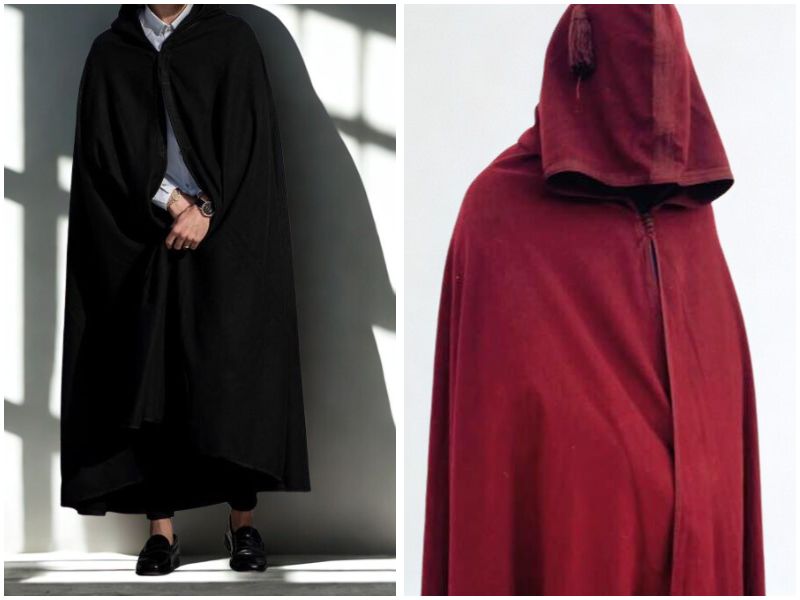

If the Moroccan Djellaba is the heart of the national wardrobe, the Selham is its crown. This majestic, sleeveless cape, featuring a signature pointed hood, is more than just a garment—it is a statement of dignity, history, and high-tier Moroccan craftsmanship.
Often seen draped over the shoulders of kings, dignitaries, and grooms, the Selham represents the peak of traditional Moroccan “Haute Couture.”
1. 📜 A Journey Through History
The Selham’s roots are deeply Berber (Amazigh), originally designed to protect against the biting cold of the Atlas Mountains. Over centuries, it evolved from a heavy, functional wool cloak into a refined ceremonial piece. Historically, it was a garment worn by scholars, warriors, and leaders, signaling a man’s status and wisdom within the community.
2. 🧵 The Art of the Handicraft (The Sfifa & Material)
A true Selham is a masterpiece of slow fashion. It is defined by two main elements:
- The Fabric: Premium Selhams are made from Mlifa (fine wool) or Sousse-style silk wool. For winter, a heavier, hand-spun wool from the Middle Atlas is used, while summer versions are made of light, translucent fabric.
- The Embroidery: The edges are adorned with Sfifa—intricate silk braids handmade by artisans using a “Maalam” technique. The gold or silk buttons (Aakad) that run down the chest are hand-knotted one by one.
3. 🤝 The Selham & Djellaba: The Perfect Match
In Moroccan men’s fashion, the Selham and the Djellaba are inseparable partners.
- The Layering Rule: A man never wears a Selham alone. It is designed to be worn over the Djellaba.
- The Contrast: Usually, a white or cream Selham is worn over a darker Djellaba (or vice versa) to create a striking visual contrast.
- The Occasion: While a man might wear a Djellaba to the mosque or a Friday lunch, he adds the Selham for weddings, religious festivals (Eid), or official ceremonies. It transforms a standard traditional outfit into a formal “Black Tie” equivalent.
4. 🧥 The Versatile Icon: From Traditional Jabador to Modern Suit
What makes the Selham truly unique is its ability to adapt to the wearer’s style without losing its Moroccan soul. While it is the natural partner to the Djellaba, it is equally stunning when paired with other ensembles:
- The Jabador: For a lighter, more agile ceremonial look, men often wear the Selham over a Jabador (a two-piece tunic and trouser set). This combination is a favorite for younger generations during weddings and Eids.
- The Modern Suit: In a bold fusion of East and West, many Moroccan professionals and grooms now drape a black or navy wool Selham over a tailored Western suit. It replaces the traditional overcoat with something much more dramatic and culturally significant.
- Casual Chic: Surprisingly, a lightweight Selham can even be worn over a casual ensemble—such as linen trousers and a simple shirt—adding an instant “bohemian-luxury” vibe to a sunset dinner or a cultural event. Its sleeveless design makes it the ultimate “layering piece” that fits over any sleeve width.
5. 🇲🇦 Significance in Modern Culture
Today, the Selham has crossed into the world of modern luxury. While it remains the standard for Moroccan grooms, modern designers are now creating “Female Selhams” with lighter fabrics and colorful embroidery, often worn over the Moroccan Caftan, making it a versatile piece of global ethnic chic. However, for Moroccan men, it remains the ultimate symbol of “Al-Hayba” (Charisma and Presence).
🏛️ Dress Like a Moroccan Noble
The Selham is not just clothing; it is an inheritance. It’s the piece that turns a special occasion into a legendary memory.
Looking to add Moroccan prestige to your wardrobe or find an authentic artisan tailor?
Click here to download our “Gentleman’s Guide to Moroccan Tailoring,” featuring the best boutiques in Fez and Rabat, and tips on how to distinguish hand-braided Sfifa from machine-made imitations!

Leave a comment