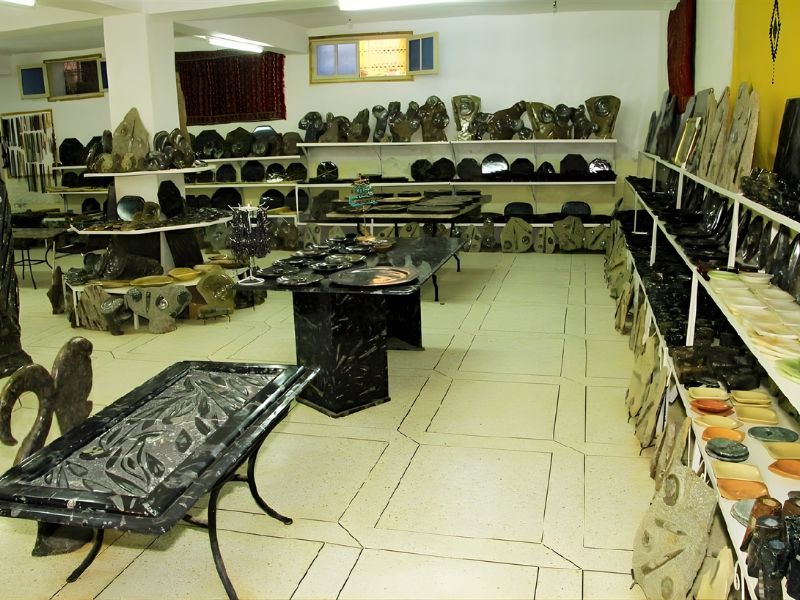

In the shadow of the towering dunes of the Sahara, the town of Erfoud stands as a gateway to another time—literally. While many travelers pass through Erfoud as they head toward the famed dunes of Merzouga, those who stop discover a geological wonderland. Millions of years ago, this arid landscape was the floor of a prehistoric ocean, and today, Erfoud is globally recognized as the “Fossil Capital of the World.”
1. 🌊 From Ancient Oceans to Desert Sands
Around 360 to 500 million years ago (during the Devonian and Ordovician periods), the area around Erfoud was submerged under a vast sea teeming with life. As these ancient sea creatures died, they were buried in sediment that eventually turned into stone.
Over eons, tectonic shifts pushed this seabed upward, and the relentless desert wind eroded the surface to reveal a staggering wealth of fossils. Today, the mountains surrounding Erfoud are essentially massive graveyards of prehistoric marine life, preserved in exquisite detail. This deep history is a stark contrast to the nearby spiritual and royal history found in Rissani, making the Tafilalt region a diverse stop for any traveler.
2. ⛏️ The Art of Fossil Marble
One of the most unique aspects of Erfoud is its Fossil Marble. Unlike fossils found in soft clay elsewhere, the specimens here are embedded in hard limestone and marble.
- Extraction: Master artisans skillfully extract large slabs of this black or brown limestone from nearby quarries.
- The Workshop Experience: Visiting a fossil workshop in Erfoud is a must. You can watch as craftsmen use specialized tools to polish the stone, revealing the white, calcified remains of creatures beneath.
- Functional Art: Erfoud is famous for turning these fossil-rich stones into everything from small decorative plates and jewelry to massive dining tables and even sinks. It is truly “functional history” that you can touch.
3. 🦖 What Can You Find in Erfoud?
Whether you are a professional paleontologist or a curious traveler, the diversity of finds in Erfoud is staggering:
- Orthoceras: Long, cone-shaped ancestors of the squid. They are easily recognized by their straight, white shells against dark stone.
- Ammonites: The iconic spiral shells that symbolize prehistoric marine life.
- Trilobites: Ancient arthropods that look like prehistoric beetles. These are often found in incredible 3D detail in the mountains near the town.
- Dinosaur Remains: Further out into the “Kem Kem Beds,” researchers have found the bones of the fearsome Spinosaurus and Carcharodontosaurus, making this a holy grail for dinosaur lovers.
4. 📍 How to Experience Erfoud’s Prehistory
If you want to go beyond the souvenir shops, here is how to dive deep:
- Visit a “Factory”: Most workshops along the main road into Erfoud welcome visitors for free demonstrations. It’s the best way to see the transformation from raw rock to polished treasure.
- The Museum of Fossils: There are several small, private museums in town that house world-class specimens of dinosaurs and rare trilobites that you won’t see in a shop.
- Fossil Hunting Tours: For the adventurous, you can hire a local guide to take you into the mountains for a few hours of “fossil hunting” where you can pick up your own small pieces of history right from the ground.
🛍️ Take Home a Piece of Prehistory
Owning a fossil from Erfoud is like owning a 300-million-year-old piece of Earth’s story. It is a souvenir unlike any other in Morocco.
Ready to discover the best workshops and hidden fossil museums in Erfoud?
Click here to download our “Erfoud Fossil Hunter’s Guide,” featuring a map of the best artisan workshops and tips on how to spot authentic fossils!

Leave a comment