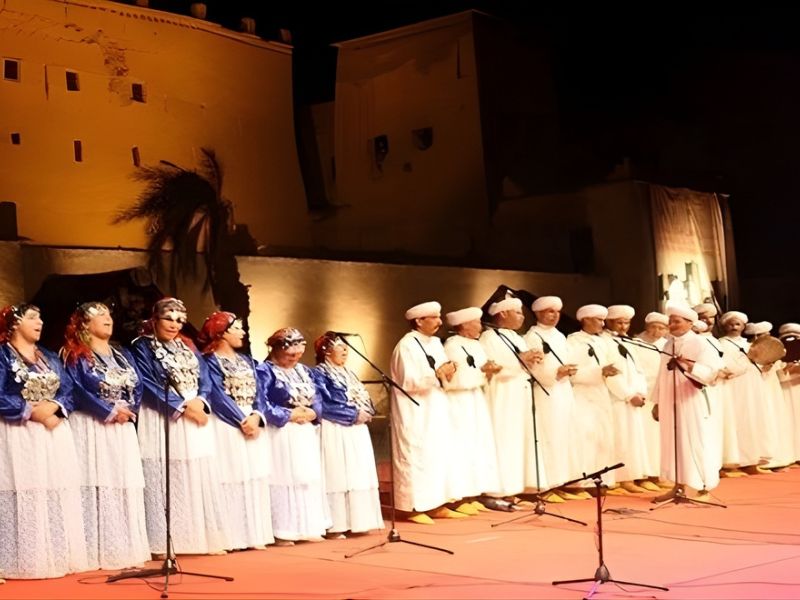

In the high, fortified villages (ksars) and palm oases of the Atlas Mountains and the Souss Valley, celebrations are marked by a mesmerizing, collective ritual: the Ahwach Dance. More than just entertainment, the Ahwach is a profound cultural institution of the Amazigh people, serving as a social chronicle, a form of communal court, and a majestic display of unity and poetic rhythm.
1. 📜 A Dance Rooted in Community and Tradition
The Ahwach (Ahwash or Ahwache) is not a performance for an audience, but a community event by the community. It is traditionally performed during major celebrations, including weddings, holidays (Eids), and seasonal harvests.
- Gender and Roles: The structure is highly organized and traditionally segregated:
- The Women: Form a large, static crescent or circle at the center. They provide the rhythmic foundation, chanting poetic verses (amarg) and moving in synchronized, swaying steps, using their hands and decorative jewelry as percussion.
- The Men: Stand in a large, often continuous circle around the women, providing the primary musical accompaniment using drums (bendir or tbel) and often dancing in more vigorous, rhythmic foot-stomping movements.
- The Amarg (Poetry): At the core of the Ahwach is the oral poetry, which is sometimes improvised. The verses often deal with themes of love, daily life, social commentary, or historical events, acting as a living archive of the community’s experiences.
2. 🎶 The Symphony of Synchronization
The true magic of the Ahwach lies in its mesmerizing synchronization, which can involve dozens or even hundreds of participants moving and singing as one.
- The Conductor (Raïs): A master musician or poet (Raïs or Cheikh) leads the rhythm and directs the chorus. They introduce the themes, set the pace, and ensure the entire community moves in perfect harmony.
- A Rhythmic Dialogue: The women’s hypnotic chanting and swaying act as a rhythmic pulse against the men’s dynamic drumming and dancing, creating a complex, multilayered soundscape that builds in intensity.
- Costume and Ornamentation: The women’s traditional attire—often featuring vibrant, matching dresses and heavy silver jewelry—adds a visual spectacle. The shimmering of the silver and the synchronized sway of the cloth are integral to the aesthetic experience.
3. 📍 Where to Experience the Ahwach
While it is a deeply private, communal rite, travelers have several opportunities to witness the grandeur of the Ahwach:
- Souss Valley and Atlas Foothills: The dance is most authentic in its original setting, in remote villages and towns around Ouarzazate, Zagora, and the Agadir hinterland, especially during local festivals or moussems.
- Timitar Festival (Agadir): Festivals like Timitar often showcase polished, large-scale performances of the Ahwach, bringing the mountain tradition to the coastal stage.
- Cultural Evenings: Some high-end hotels and cultural centers in Marrakesh and Agadir offer specialized, curated performances, though they may lack the spontaneity of a true village celebration.
The Ahwach is a celebration of life, heritage, and the enduring power of Amazigh community, making it one of Morocco’s most magnificent and unforgettable cultural sights.
🛍️ Feel the Rhythm of the Mountains
The sound of the Ahwach drum is the authentic voice of the Atlas Mountains, a powerful symbol of Amazigh heritage and community spirit.
Ready to witness this breathtaking spectacle of poetry, rhythm, and unity?
Click here for our essential guide on finding authentic Ahwach performances, understanding the music, and learning about the traditional Amazigh silver jewelry worn during the dance!

Leave a comment