If the Djellaba is the heart of everyday Moroccan fashion, the Caftan (or Kaftan) is its soul—a garment of unparalleled luxury, history, and craftsmanship reserved for the most significant occasions. The Caftan is the ultimate expression of Moroccan identity, where fabric, gold thread, and generations of artisan skill converge to create a piece of wearable art.
More than just a dress, the Caftan is a symbol of status, femininity, and the nation’s profound textile heritage.
1. 📜 A History Woven in Silk and Gold
The Caftan’s history in Morocco is long and prestigious, closely tied to imperial courts and global trade:
- Ottoman/Asian Origins: The Caftan itself originated in the Near East and Central Asia. Its entry into the Maghreb was likely facilitated by trade routes and cultural exchange with the Ottoman Empire.
- Imperial Adoption: The garment was embraced by Moroccan royalty and the urban elite, particularly in imperial cities like Fez, Meknes, and Rabat. It became the signature attire for important court ceremonies.
- The Golden Age: The Caftan achieved its most intricate and celebrated forms in Morocco, where artisans adapted the silhouette and perfected unique embroidery techniques, securing its place as the central ceremonial garment for women.
2. ✨ Design, Style, and Silhouette
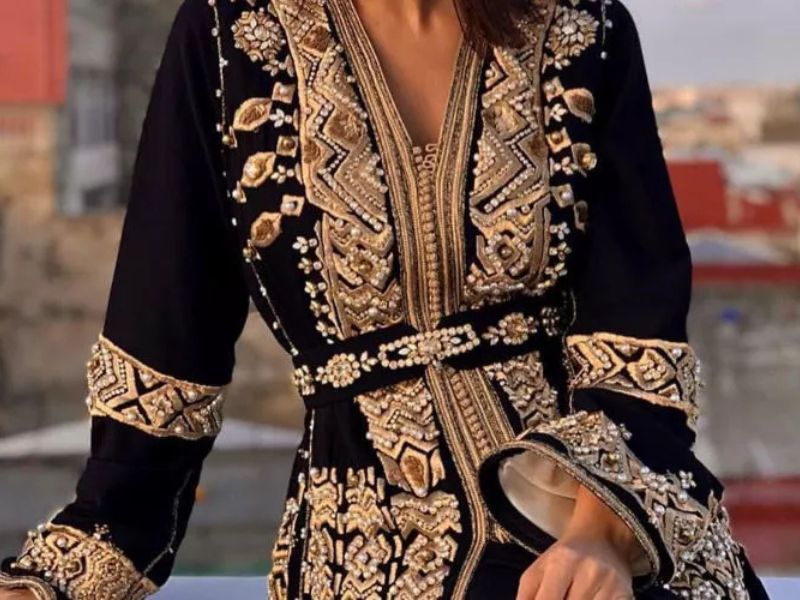
The Caftan is typically a long, loose-fitting, unbelted robe with wide sleeves. Its beauty lies in the quality of the fabric and the complexity of its ornamentation.
- The Fabric: Caftans are crafted from luxurious materials, ranging from rich silks and velvets to brocades, crepe, and fine muslin. The fabric itself dictates the drape and flow of the garment.
- Embellishment: Unlike the Djellaba, which features embroidery mainly around the opening, the Caftan’s embroidery is often dense, covering the chest, sleeves, and hems. This detailing often uses gold or silver thread (sfīfa), adding immense weight and value.
- The Takchita (The Two-Piece Caftan): For weddings and the most formal events, the two-piece Takchita is worn. This consists of a fine, often simple under-layer (Tahtia) and a stunning, heavily embroidered, and often translucent over-robe (Dfina), which is worn open and cinched with a wide, jeweled belt (Mdamma).
3. 🧵 The Zenith of Moroccan Embroidery
The Caftan is the canvas upon which Moroccan embroidery traditions reach their peak. The UNESCO nomination process highlights this garment precisely because of the crucial role of embroiderers (ttrazate).
- Gold and Silk Thread: The most traditional and valuable Caftans feature embroidery done with high-quality silk or, most prestigiously, gold and silver metallic thread, often in intricate geometric or stylized floral patterns.
- Artisan Techniques: Techniques often include Terz El Fezzi (Fez embroidery) for delicate, monochromatic effects, and more bold, structural embroidery techniques unique to the Caftan that give it a stiff, tailored look.
- Handicraft Integration: The garment relies heavily on specialized artisans who create the Sfīfa and ‘Aqad (braided trim and handmade buttons) that line every opening, a process that can take hundreds of hours of painstaking labor.

4. 🇲🇦 The Caftan in Moroccan Ceremonies
The Caftan is synonymous with celebration, making it the most important garment for women in Moroccan ritual life.
- Weddings (The Centerpiece): The bride may wear up to seven different Caftans or Takchitas throughout her wedding celebration, each one marking a stage of the ceremony and symbolizing wealth and family status. The garment is the ultimate expression of bridal splendor.
- Ceremonial Dress: It is the required attire for women attending any major family milestone—engagements, births, circumcision parties, and grand festivals.
- Cultural Identity: Wearing the Caftan is a powerful statement of cultural pride and connection to Moroccan heritage, a tradition maintained even by Moroccans living abroad.
The Caftan is more than historical clothing; it is a repository of Moroccan artistry, a garment that continues to define moments of majesty and celebration across the country.
🛍️ Wearable Art: Find Your Statement Caftan
The Caftan is an investment in cultural heritage—a garment that will instantly connect you to the history and artistry of Morocco. Whether you choose a simple velvet Caftan or an elaborate, two-piece Takchita, you own a piece of textile royalty.
Ready to find a Caftan that embodies Moroccan elegance and craftsmanship?
Click here to explore our guide on finding authentic Caftans and Takchitas from master Moroccan designers!

Leave a comment