

In Morocco, beauty is often sourced directly from the earth, and no natural ingredient holds more significance than Henna (Lawsonia inermis). Beyond its striking reddish-brown stain, Henna is a powerful natural cosmetic, a sacred tradition, and an essential part of the Moroccan cultural narrative.
As a powder derived from dried, crushed leaves, Henna represents the perfect synthesis of beauty, spirituality, and art, playing a vital dual role in Moroccan life—from the apothecary to the wedding ceremony.
1. The Natural Cosmetic Powerhouse
Long before industrial dyes and chemical treatments, Henna was the ancient world’s answer to natural coloring and conditioning. Its benefits for the hair, skin, and nails are deeply rooted in its natural composition.
✨ For Hair: Conditioning and Color
Henna is widely celebrated as the ultimate natural hair treatment:
- Natural Colorant: It deposits a permanent reddish-brown stain, which can be altered using other natural ingredients like hibiscus (for redder tones) or indigo (for darker tones).
- Deep Conditioning: The Henna molecules bond with the keratin in the hair shaft, effectively strengthening and coating each strand. This process leads to increased volume, shine, and reduced breakage.
- Scalp Health: Henna is known for its mild anti-fungal and antibacterial properties, helping to soothe dry, itchy scalps and potentially mitigating issues like dandruff.
✨ For Skin and Nails: Cooling and Protection
Beyond hair, Henna is used for its therapeutic qualities:
- Natural Coolant: Applying a Henna paste (or even just Henna water) to the hands and feet creates a cooling sensation as the moisture evaporates. Historically, this was vital for desert dwellers to combat the intense summer heat.
- Nail Hardener: Applying Henna paste to the nails (a simpler, darker stain than on the skin) naturally strengthens them against brittleness and splitting.
2. The Cultural Heart: Henna in Moroccan Ceremonies
In Morocco, Henna is not just a cosmetic choice; it is a rite of passage and a symbol of baraka (blessing, good fortune, and protection). Its presence is mandatory at life’s most significant transitions.
💍 The Henna Night (Laylat al-Hinna)
The most famous cultural function of Henna is in the wedding ceremony. The Laylat al-Hinna is a joyous, women-only celebration held just before the marriage.
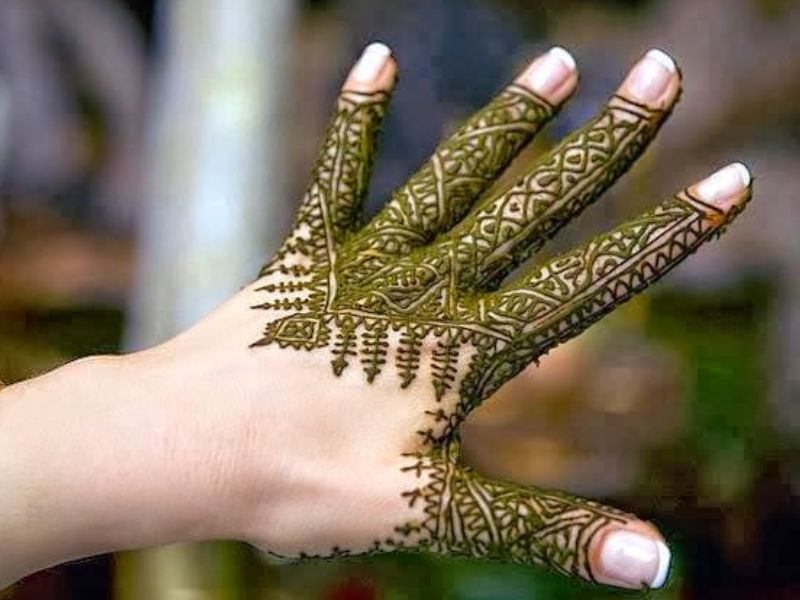
- A Symbol of Good Luck: The bride receives intricate Henna designs on her hands and feet. These patterns are not merely decorative; they are elaborate blessings designed to ward off the evil eye, ensure fertility, and bring prosperity to the new union.
- Bridal Tradition: The application is performed by the Nekasha (professional Henna artist) and is accompanied by music, singing, and feasting, symbolizing the transition from maidenhood to marriage.
- Guests Participate: Female family members and guests often receive smaller, simpler Henna applications to share in the baraka of the bride.
🌙 Religious and Seasonal Celebrations
Henna is also used to mark other significant occasions:
- Eid al-Fitr and Eid al-Adha: Women and children often apply Henna to themselves in simple designs to celebrate the major religious holidays.
- Births and Circumcision: Applying Henna is common after the birth of a baby or during the ceremony of a boy’s circumcision, again symbolizing protection and blessing.
3. The Art of the Stain: Fassi vs. Berber
The designs themselves are a rich form of folk art, reflecting regional identity:
- Fassi (Northern) Designs: Named after the city of Fez, these designs are typically intricate, geometric, and delicate. They often feature floral or lattice patterns with great symmetry, using negative space to create a lace-like effect.
- Berber/Saharan Designs: These are often bold, angular, and symbolic. Designs frequently incorporate diamonds, zigzags, and lines that represent natural elements, protection, and nomadic life.
Henna remains an enduring symbol of natural Moroccan beauty—a tradition preserved not just through its application, but through the deep spiritual and cultural meaning layered into every single stain.

Leave a comment