

If the Tafilalt is the cradle of Morocco’s Alawite Dynasty, then Rissani is its undisputed heart. Located where the vast palm groves end and the Saharan dunes begin, Rissani is a town of profound historical weight. It is not a bustling modern city but a place of continuity, where the weekly market still echoes the wealth of the ancient trans-Saharan trade routes.
Visiting Rissani means stepping into a living history book, anchored by the remnants of a forgotten empire and serving as the essential gateway to the spectacular Erg Chebbi desert.
📜 The Echoes of Sijilmasa
Rissani’s significance is inseparable from its legendary predecessor, Sijilmasa.
The Lost City of Gold
Just 3 kilometers north of modern Rissani lie the extensive, earth-colored ruins of Sijilmasa, once one of the most important medieval cities in North Africa. From the 8th to the 14th century, Sijilmasa flourished as the northern terminus of the gold trade. Caravans brought gold, salt, and spices from the south, and wealth flowed through the city.
Today, while the walls are largely reduced to mounds of earth, the sheer scale of the ruins hints at the city’s former glory. Rissani took its place as the commercial and spiritual hub after Sijilmasa’s decline.
The Alawite Stronghold
The town and its surrounding area hold sacred importance for the Moroccan royal family. It was here, amidst the Tafilalt oasis, that the Alawite Sharifian family established its authority. Rissani is home to the Mausoleum of Moulay Ali Cherif, the founder of the current ruling dynasty. This site underscores Rissani’s role as the dynasty’s spiritual and ancestral home, making it a pivotal spot in Moroccan history.
🛍️ What to See in Rissani Town
Rissani’s charm lies in its authenticity and traditional rhythms. Unlike the heavily developed tourist hubs, Rissani maintains its function as a central market town for the surrounding oasis communities.
1. The Traditional Souk (Market)
The Rissani market is famous throughout the region and is a must-see for travelers. It is most vibrant on Sunday, Tuesday, and Thursday.
- A Unique Atmosphere: The market is known for its size and diversity, selling everything from traditional crafts and jewelry to spices, livestock, and fresh produce from the oasis.
- Donkey Parking: A quintessential Rissani sight is the large, designated “donkey parking lot,” a testament to the fact that rural transportation remains essential here.
- Local Attire: This is a great place to see locals wearing traditional Saharan clothing and to buy your own vibrant blue jallaba or desert scarf.
🍽️ The Local Culinary Gem: Madfouna (Berber Pizza)
Beyond the historical sights, Rissani offers a unique culinary experience: Madfouna, often called “Berber Pizza.” This specialty of the Tafilalt region is a thick, stuffed bread that is traditionally baked in the hot sand of the desert. The dough is filled with a mixture of spiced ground meat (lamb or beef), hard-boiled eggs, onions, and local herbs. Finding and eating this communal dish at one of the local stalls is an essential, authentic experience in Rissani.
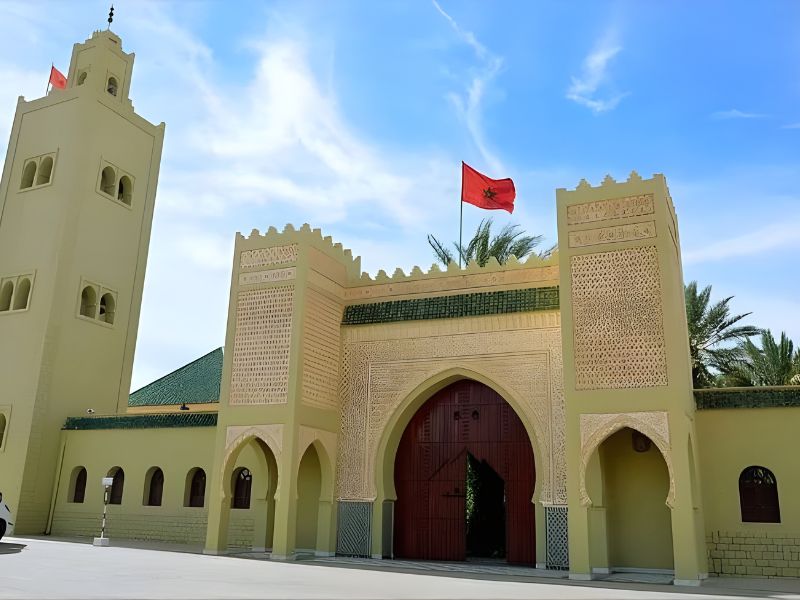
2. The Mausoleum of Moulay Ali Cherif
The most important historical site in Rissani, the Mausoleum complex houses the tomb of Moulay Ali Cherif, the 17th-century founder of the Alawite Dynasty. While access to the burial chamber is typically reserved for Muslims, visitors can admire the exterior and the surrounding architecture.
3. Ksars and Fortifications
Rissani is surrounded by magnificent old ksars (fortified villages). These traditional mud-brick citadels are still home to local families, showcasing the ancient defensive architecture required in the volatile desert environment. A prominent example is the nearby Ksar Abbar.
🏜️ The Surrounding Desert Wonders
Rissani serves as the final, major point of civilization before you venture into the spectacular desert landscape.
1. Erg Chebbi (Merzouga Dunes)
The most popular attraction in the area is the towering dune field of Erg Chebbi, located approximately 40 minutes east of Rissani, near the village of Merzouga.
- Golden Beauty: These magnificent dunes reach heights of up to 150 meters and are famed for their stunning orange and pink hues, particularly at sunrise and sunset.
- Activities: This area offers the classic Moroccan desert experience, including camel trekking, overnight stays in traditional desert camps, and 4×4 dune bashing.
2. Fossil Beds and Mineral Exploration
The regions around Rissani and Erfoud (further north) are globally renowned for their rich fossil deposits. The landscape is a geological treasure trove, and you can visit small workshops and roadside stalls where local artisans polish and prepare ancient trilobites, orthoceras, and ammonites found right in the desert rock.
Rissani is a mandatory stop for anyone seeking to understand the deep, interwoven history of Morocco—from its gold-trading empires to its current royal lineage—all set against the majestic backdrop of the Sahara.
Rissani is where the desert road ends and Moroccan history begins. It’s an authentic living museum where you can trace the roots of the royal family and witness a vibrant trans-Saharan market tradition.
Ready to experience the true heartbeat of the Tafilalt region?
Click here to download our guide on how to spend a perfect day in Rissani, including the best market days and where to find the legendary Madfouna (Berber Pizza)!

Leave a comment