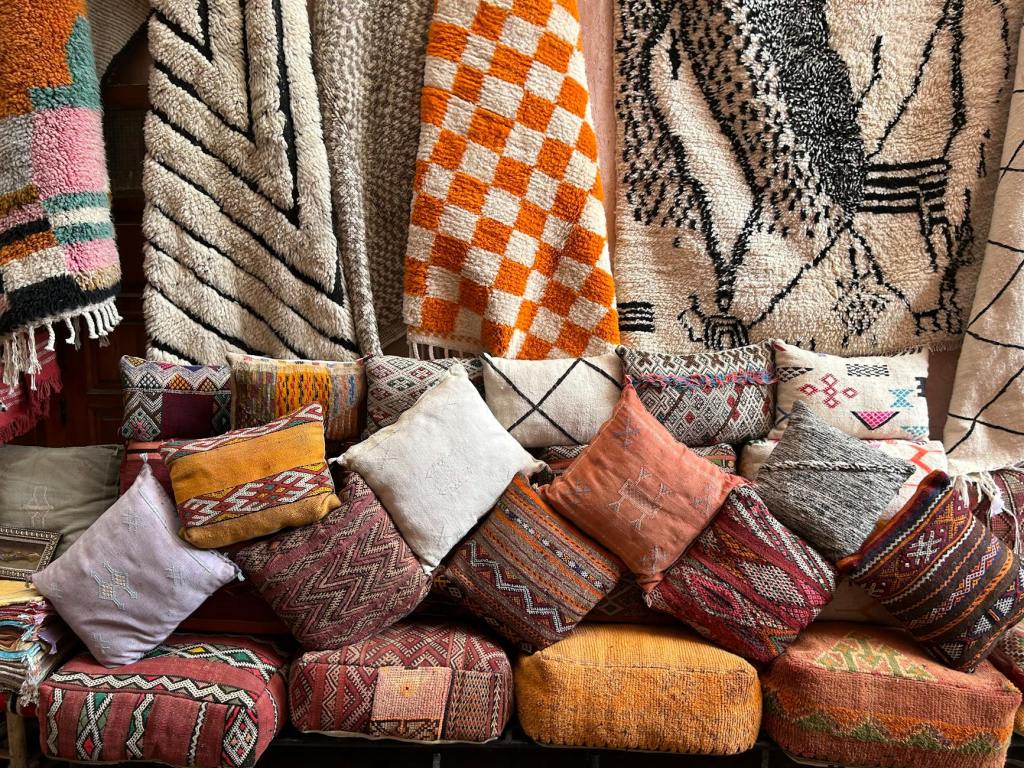
Step into almost any Moroccan home or riad, and your eyes will be drawn to the floor—adorned with a rug that is a piece of art, a burst of color, and a silent storyteller. Moroccan rugs are far more than floor coverings; they embody the very soul of the country’s unparalleled Handicraft heritage. Each knot is a testament to generations of skill, creativity, and the resilience of the Amazigh people.
Let’s unravel the beauty and profound meaning woven into these magnificent textiles and discover how they serve as a vibrant lifeline for the incredible Amazigh (Berber) communities that keep this ancient art alive, particularly in regions stretching from the High Atlas Mountains down to the Atlantic coast.
1. 📜 A Heritage Woven Through Time: The Story in Every Knot
Moroccan rugs trace their origins back centuries, deeply rooted in the nomadic and semi-nomadic traditions of the Amazigh people. For them, a rug was essential: it provided shelter, served as a prayer mat and a bed, acted as a storytelling canvas, and was a cherished possession passed down through families.
What makes Moroccan rug weaving so unique is its authentic, organic evolution. Unlike many other traditions, Amazigh rugs were rarely created from formal, written patterns. Instead, designs were passed down through oral tradition, intuition, and the personal expression of the weaver. Each woman, as it was predominantly women who mastered this art, would infuse her own experiences, dreams, and the spirit of her surroundings into the motifs and colors she chose. This results in an incredible diversity where no two rugs are exactly alike.
Key Styles and Tribal Signatures:
| Rug Style | Region | Defining Characteristics |
| Beni Ourain | Middle Atlas Mountains | Plush, shaggy pile, known for minimalist geometric patterns on creamy natural wool. |
| Azilal & Boujad | High Atlas Region | Vibrant, spontaneous, and often abstract designs, celebrated for their unique color palettes. |
| Kilims & Hanbels | Various Regions | Flat-woven rugs and blankets, characterized by striking, dense geometric patterns. |
| Boucherouite | Rural Morocco | Ingenious rag rugs, born from recycled fabrics, representing exceptional resourcefulness and sustainability. |
Each style and every motif carries a piece of history—symbols of protection, fertility, family, and the natural world—echoing the specific cultural nuances of the communities from the Atlas mountains to the vibrant souks of Marrakesh.
2. 🎨 The Artistry: Beyond the Loom
The creation of a Moroccan rug is a labor of love, patience, and profound skill:
- Wool Sourcing: Utilizes local, high-quality sheep’s wool, which is carefully cleaned, carded, and spun by hand.
- Natural Dyes: Traditionally, wool was dyed using natural pigments extracted from plants, insects, and minerals. This process yields characteristic earthy, rich hues that age beautifully. This dyeing knowledge is a heritage in itself, often found in villages surrounding regional hubs.
- Hand-Knotting or Weaving: Depending on the type, rugs are meticulously hand-knotted (sometimes involving millions of knots) or expertly flat-woven on traditional looms.
- Intuitive Design: The patterns often emerge organically as the weaver works, ensuring each piece is truly a unique work of art rather than a mass-produced item.
This meticulous process can span weeks or even months, serving as a powerful testament to the artisans who preserve techniques passed down through countless generations.

3. 👩🌾 A Lifeline for Amazigh Communities: Sustaining Livelihoods
Beyond their beauty, Moroccan rugs play an indispensable role in the economic and social well-being of the Amazigh people, especially women in rural and mountainous regions.
- Economic Empowerment: For many Amazigh women, rug weaving is a primary source of income, providing financial independence to support their families, invest in their children’s education, and improve their living conditions. It is a powerful tool for self-sufficiency.
- Preservation of Cultural Heritage: Investing in an authentic Moroccan rug directly contributes to the preservation of this ancient craft. Demand for hand-woven rugs ensures that these intricate techniques, unique symbols, and the knowledge behind natural dyeing continue to be passed down.
- Sustainable Artistry: Many traditional Moroccan rugs, particularly Boucherouite (rag rugs), embody an incredible spirit of sustainability. They are crafted from repurposed fabrics, minimizing waste and reflecting a deep respect for resources.
4. 🏡 Bringing a Piece of Berber Soul into Your Home
When you welcome a Moroccan rug into your living space, you are inviting a piece of Amazigh history, artistry, and resilience into your home. You’re supporting fair trade, sustainable practices, and the continuation of an art form that deserves to thrive.
Each thread carries the story of skilled hands, the echoes of ancient looms, and the unwavering spirit of the Berber people. It’s a tangible connection to a rich cultural heritage, woven with heart and imbued with a beauty that goes far beyond the surface.
🛍️ Invest in Art and Empowerment
The right Moroccan rug is more than decor—it’s an investment in the soul of your home and the livelihood of the women who weave its story.
If you are ready to own a unique piece of Amazigh heritage that combines profound symbolism with ethical craftsmanship, your journey starts here.
Click here to explore our curated collection of authentic, ethically-sourced Amazigh rugs and flat-weaves!

Leave a comment