As you step into a Moroccan souk, your senses are immediately captivated. First is the scent of spices. Then you see a kaleidoscope of textiles. Finally, you notice the gleam of ceramics. Moroccan pottery isn’t just about functional objects. It’s a vibrant storytelling tradition. It serves as a tangible link to ancient techniques. It is also a dazzling display of artistic mastery. Moroccan pottery takes you from the iconic tagine to intricately painted platters. It dives deep into the nation’s soul. It reflects centuries of history, culture, and artistic dedication.
For those who appreciate craftsmanship and the beauty of handmade traditions, exploring Moroccan pottery offers a profound connection. It connects you to the heart of the Kingdom.
A Legacy Forged in Clay and Fire
The art of pottery in Morocco stretches back millennia, predating even the arrival of Islam. Indigenous Berber/Amazigh communities perfected techniques passed down through generations, utilizing the rich clays found across the diverse landscapes. Over time, these indigenous methods blended with influences from Andalusia (Islamic Spain). They also incorporated styles from the Middle East. This is particularly evident in decorative styles like zellij (geometric mosaic tilework). These influences led to the distinct and celebrated forms we see today.
Pottery has always been central to Moroccan life, serving both practical and aesthetic purposes in homes, kitchens, and ceremonial spaces.
The Major Centers of Moroccan Pottery
While pottery is found throughout Morocco, certain cities have become renowned for their unique styles and techniques:
- Fez (Fes): The undisputed capital of traditional Moroccan pottery, particularly famous for its distinctive blue and white ceramics. The blue, often derived from cobalt, reflects the city’s intellectual and spiritual heritage. Fez pottery is known for its intricate geometric patterns, floral motifs, and calligraphic designs. You can often see the traditional kilns (furnaces) outside the city walls.
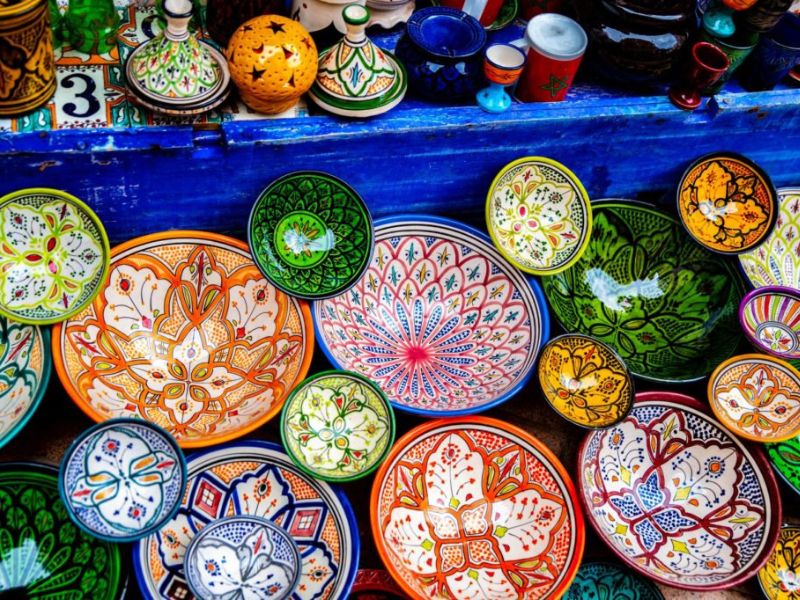
- Safi: Located on the Atlantic coast, Safi is the hub for more colorful, polychrome (multi-colored) pottery. Its vibrant red, green, yellow, and blue glazes are characteristic. These often feature figurative designs like fish or animals. There are also more abstract patterns. Safi is also known for producing a large volume of functional earthenware.
- Salé and Rabat: Salé is close to the capital. It produces pottery that often blends elements of both Fez and Safi styles. The pottery also has its own distinctive touch.
- Tetouan: In the north, Tetouan’s pottery often shows strong Andalusian influences, sometimes featuring more restrained palettes and intricate linear designs.
- Rural/Berber Pottery: Beyond the urban centers, many rural regions produce unglazed or simply decorated terracotta pottery. This is especially true in the Atlas Mountains. These pieces are often more utilitarian, with earthy tones and simpler forms, reflecting the rugged beauty of their origins.
The Craft: From Earth to Art
The creation of Moroccan pottery is a meticulous, labor-intensive process that relies on traditional methods:
- Clay Preparation: Local clays are carefully sourced, cleaned, and kneaded to achieve the perfect consistency.
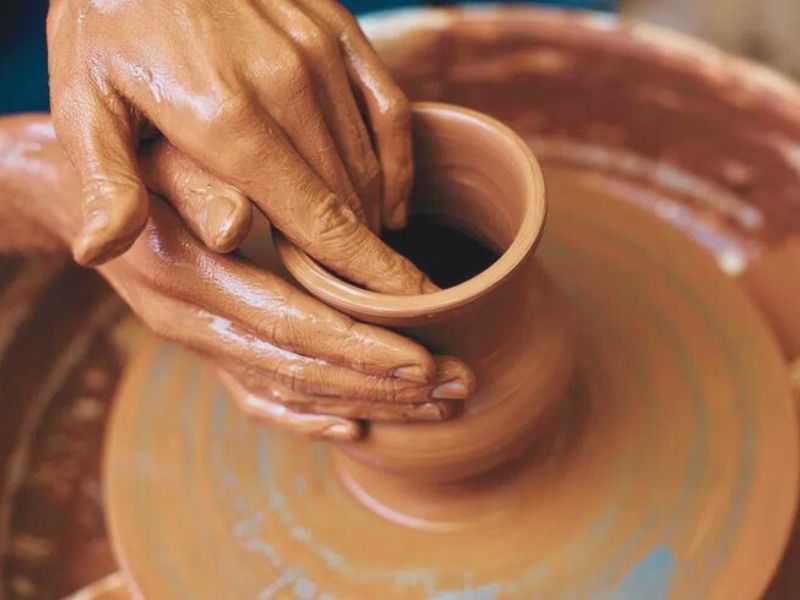
- Shaping: Potters use a traditional kick-wheel, skillfully shaping the clay with their hands. It’s a mesmerizing dance between human and material.
- Drying: Once shaped, the pieces are left to dry naturally in the sun.
- First Firing (Bisque Firing): The dried pieces undergo their first firing in large, traditional kilns. This process transforms the clay into a durable, porous form.
- Glazing & Painting: This is where the magic happens. Artisans hand-paint intricate designs using natural mineral pigments. They then apply a transparent glaze.
- Second Firing (Glaze Firing): The pieces are fired again at a higher temperature. This process melts the glaze. It creates the characteristic glossy finish and intensifies the colors.
Functional Art: What to Explore and Buy
Moroccan pottery is incredibly versatile, gracing homes both locally and internationally:
- Tagines: The iconic conical cooking vessel is perhaps the most famous Moroccan ceramic. Used for slow-cooking stews, they come in both unglazed (for cooking) and beautifully glazed (for serving) varieties.
- Platters and Bowls: These range from large, decorative serving platters. They also include small, intricate bowls for olives or spices. These pieces are often adorned with stunning patterns.
- Vases and Urns: Elegant and often large, these decorative pieces add a touch of Moroccan grandeur to any space.
- Tea Sets: Beautifully crafted teapots and small cups reflect Morocco’s cherished tea-drinking ritual.
- Souvenirs: Small hand-painted trinket boxes, ash trays, or miniature tagines make perfect gifts.
More Than Just an Object
Moroccan pottery is a living testament to the country’s artistic soul. Each piece carries the story of the artisan, the local clay, and centuries of inherited knowledge. When you buy a piece of Moroccan pottery, you’re not just purchasing a beautiful object. You’re taking home a fragment of its history. You are also acquiring a piece of its vibrant culture and the enduring legacy of craftsmanship perfected over generations. It’s a reminder of the earth transformed into art. It serves as a staple of daily life. It is a cherished piece of Moroccan heritage.

Leave a comment