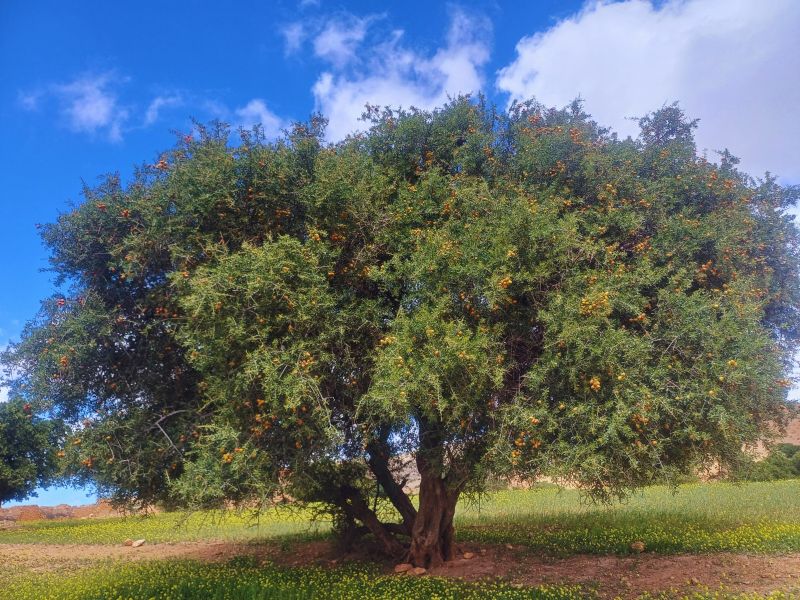

In the sun-drenched, arid landscapes of southwestern Morocco, a unique and ancient tree stands as a testament to nature’s resilience. It is also a cornerstone of Moroccan culture: the Argan tree (Argania spinosa). Often referred to as “the tree of life,” this remarkable species holds many titles, including “Morocco’s Liquid Gold.” It is far more than just a source of the world-renowned Argan oil. It plays a vital role as part of the ecosystem. It is a symbol of heritage and serves as a powerful engine for community empowerment.
A Native Treasure with Deep Roots
The Argan tree is endemic to Morocco, meaning it grows nowhere else naturally on Earth. The gnarled and thorny branches of the tree enable it to thrive. Its deep root system allows it to survive in the harsh, semi-desert conditions of the Souss-Massa region. UNESCO recognized this area as the Arganeraie Biosphere Reserve in 1998. This designation highlights the tree’s ecological importance. It plays a crucial role in preventing desertification. The tree is essential for maintaining biodiversity in this vulnerable ecosystem. Its roots help stabilize the soil, preventing erosion, and its canopy provides shade and habitat for various animal species.
The Golden Fruit of argan tree and Its Precious Oil
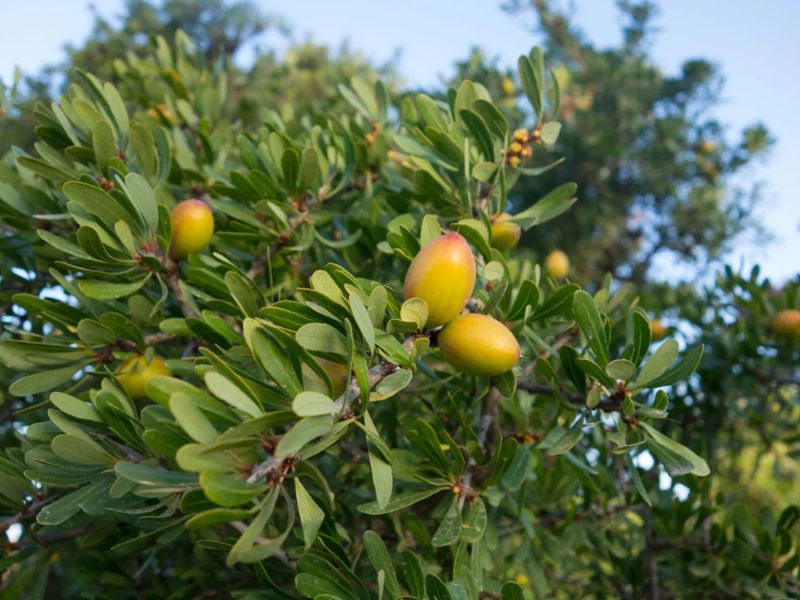
The Argan tree produces small, oval, yellow-green fruits that ripen in late spring or early summer. Inside these fleshy fruits is a hard nut. Within that nut are the precious kernels. These kernels are rich in oil and are used to extract Argan oil.
The traditional process of extracting Argan oil is a labor-intensive art, largely carried out by Berber/Amazigh women in cooperatives. This age-old method typically involves:
- Harvesting: Goats are often seen climbing the trees to eat the fruit. They sometimes spit out the nuts. The fallen fruit is hand-gathered.
- Drying: The fruits are sun-dried to remove the fleshy pulp.
- Cracking: The hard nuts are then cracked open. This is usually done by hand using stones. It is a task that requires considerable skill and patience.
- Extracting Kernels: The precious kernels are carefully extracted from inside the cracked nuts.
- Grinding and Pressing: For culinary oil, the kernels may be lightly roasted to impart a nutty flavor. Both cosmetic and culinary kernels are then ground into a paste and pressed to yield the golden oil.
This traditional, cold-pressed method ensures that the oil retains its full spectrum of beneficial nutrients. This makes it highly prized globally for its cosmetic, culinary, and medicinal properties.
More Than Just Oil: Cultural and Economic Significance
The Argan tree’s importance extends far beyond its famous oil. It’s deeply intertwined with the cultural fabric and economic well-being of the Berber/Amazigh communities in the region:
- Economic Empowerment: The growing global demand for Argan oil has provided a crucial source of income. It benefits thousands of rural women. Many of these women are often organized into cooperatives. This empowers them economically, improving their livelihoods and social standing.
- Cultural Heritage: The knowledge and practices related to the cultivation of Argan are part of an ancient heritage. They include harvesting and processing methods. This heritage has been passed down through generations. The tree itself holds symbolic value, representing resilience and life.
- Local Uses: The dead wood of the tree is used as firewood for cooking and heating. The fruit remains used to extract oil are also used as firewood. Its leaves and pulp provide fodder for livestock.
A Symbol of Sustainability and Hope
Today, the Argan tree is not only a natural wonder but also a symbol of sustainable development. Efforts are underway to protect and regenerate Argan forests. Initiatives also aim to combat desertification. The goal is to ensure the continued prosperity of the communities that depend on it. UNESCO even proclaimed May 10th as the International Day of Argania, recognizing its global importance.
Visiting the Argan-growing regions offers a profound connection to Morocco’s natural and cultural heart. Learning about the extraction process at a local cooperative deepens this understanding. Seeing these magnificent trees firsthand enhances this experience. The Argan tree truly embodies the spirit of Morocco. It is ancient and resilient. It is vibrant and incredibly rich in its offerings to the world.

Leave a comment