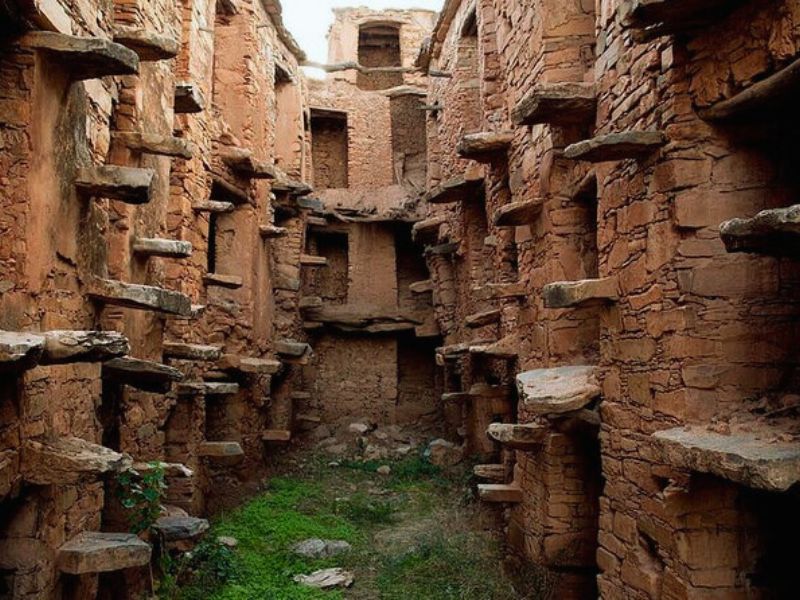

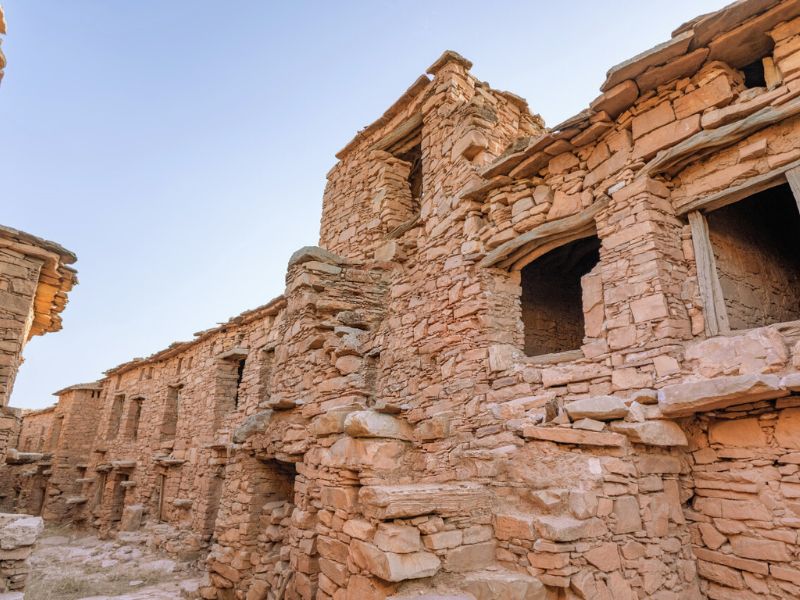
Morocco’s rich history is reflected in its ancient granaries, known as “agadirs” or “igherm” in the local Amazigh/Berber language. These structures, found throughout the country, particularly in the Atlas Mountains, showcase the resourcefulness and ingenuity of the Amazigh/Berber communities. In this blog, we’ll explore some of the most notable ancient granaries in Morocco. We will delve into their history and architecture. We will also examine their function in the local economy and cultural significance.
Igoudar: The Granary of the Souss Region
Located in the Souss region, Igoudar is one of the most famous ancient granaries in Morocco. This impressive structure dates back to the medieval period and features thick walls made from local stone and mud. Igoudar’s strategic location allowed it to play a crucial role in the regional trade and commerce. Grains were stored and exchanged for other goods.
Function in the Local Economy:
These granaries served as central storage facilities for grains, ensuring food security and stability in the local economy. They allowed communities to store grains for long periods, protecting them from pests, harsh weather conditions, and potential invaders.
Cultural Significance:
The granaries held significant cultural importance, often serving as community gathering places and symbols of collective wealth. They represented the resourcefulness of the Amazigh/Berber communities. These structures showcase their cooperation and ability to work together. They built and maintained these structures.
Some Granaries Still in Use Today:
While many ancient granaries have fallen into disrepair, some continue to function today, albeit in a limited capacity. For example:
- Agadir Imchguilen: This historic granary, a significant cultural symbol and tourist attraction, is approximately 750 years old. Nestled in the Ait Baha region near Agadir, it is renowned for its vast corridor. The corridor is flanked by two impressive rows of huts. These huts were traditionally used to store vital resources such as foodstuffs, crops, jewelry, and important documents. The structure is one of the oldest “igoudar” in the region, embodying the rich history of communal storage systems. Recent renovations have carefully restored around thirty huts, a central square, a mosque, and outbuildings. The renovations respected and adhered to the traditional Anti-Atlas construction techniques. These techniques define the architectural heritage of this area. This meticulous restoration process ensures that Agadir Imchguilen remains a vital link to the past for both locals and visitors.
- Agadir Tasguent (Six-storey attic): To the northeast of Tafraout you’ll find one of the most beautiful “igoudars” in the region. The Agadir Tasguent is over 350 years old. Tasguent is one of the largest and best-preserved in the Anti-Atlas Mountains. Limited by the chosen terrain, the agadir rises six stories high. Its architecture is impressive. The agadir contains three courtyards accessible by two covered passageways. The first passageway serves the first two courtyards and the central square. Hundreds of huts line its walls. Access is by climbing stone platforms that serve as stairs. Some local families continue to use this granary for storing small quantities of grains, preserving traditional practices.
Other Notable Granaries
Other notable ancient granaries in Morocco include:
- Agadir Oumesnat: Located in the High Atlas, this granary features a unique design and stunning views of the surrounding landscape.
- Agadir Inoumar: Situated in the Anti-Atlas region, this granary showcases the local Berber architecture and culture.
- Timit, Agadir Sidi Moussa: Found in the Souss region, this granary is known for its distinctive design and historical significance.
Preserving Morocco’s Cultural Heritage
These ancient granaries are not only remarkable examples of Amazigh/Berber architecture but also an important part of Morocco‘s cultural heritage. Efforts are being made to preserve and restore these structures, ensuring that future generations can appreciate their history and significance.
Morocco’s ancient granaries are a testament to the country’s rich history and cultural diversity. These structures, found throughout the Atlas Mountains, showcase the resourcefulness and ingenuity of the Amazigh/Berber communities. By exploring these ancient granaries, we can gain a deeper understanding of Morocco’s history, culture, and traditions.
References
- Moroccan Ministry of Culture

Leave a comment